The adam audio t5v electronic music closet studio pairing is one of the smartest near-field decisions you can make if you produce house, techno, drum & bass, dubstep, or any bass-driven electronic genre inside a converted closet. The T5V's U-ART folded ribbon tweeter resolves hi-hats, transient claps, and reverb tails with surgical detail, while the 5-inch woofer delivers enough low-mid punch to mix kicks and sub-anchored basslines without overwhelming a 3-by-4-foot listening box. In a properly treated closet, the T5V's tight imaging and controlled dispersion mean you actually hear what's in your mix, not what your room is smearing across the response.
This guide walks through why the T5V is uniquely suited to closet studios, how to treat the room so the monitors can do their job, ideal positioning, subwoofer considerations, and where the T5V starts to hit its limits. By the end you'll know whether the T5V belongs in your setup, what alternatives to consider, and how to wring professional-grade translation out of a space the size of a phone booth.
Why the T5V works so well in a treated closet
Closet studios are tricky because the listening triangle is always shorter than you'd like, and the boundaries are aggressive: walls within arm's reach, a ceiling that drops a few inches above your head, and a back wall pressed up against the monitor stands. A monitor that throws a wide, hot top end into that environment will pile up phantom imaging issues and harsh sibilance. A monitor with a sloppy rear port will couple with the back wall and turn every 100 Hz bass note into mud.
The T5V sidesteps both traps. The U-ART tweeter has a roughly ±50° horizontal dispersion that stays predictable off-axis, so when you scoot left or right in a cramped chair the stereo image doesn't collapse. The rear bass-reflex port is tuned conservatively for a 5-inch driver, and the cabinet's low-frequency extension to about 45 Hz means you're not asking the port to do work it can't handle. Adam Audio also gives you HF and LF shelving controls on the rear panel, which is essential in a closet: you'll almost certainly pull the LF shelf down 2 to 4 dB to compensate for boundary loading from a near back wall.
Sound signature for electronic music production
Electronic music lives or dies on three things: transient definition, sub-bass control, and stereo width. The T5V handles all three in ways that matter for a producer mixing in a closet.
The folded ribbon tweeter is what sets the T5V apart from dome-tweeter rivals at the same price. Ribbon-style transducers move air with a much larger surface area than a 1-inch dome, which translates to faster transient response and lower distortion at moderate listening levels. For an electronic producer this shows up immediately: 909 hat layers stop sounding like a single blob and start revealing the individual ticks, ride cymbals stop fizzing, and reverb tails decay cleanly instead of smearing into the next bar.
On the low end, the T5V's 5-inch woofer won't replace a sub, but it will give you honest information down to about 50 Hz in a treated room. That's enough to dial in 808s, sidechained basslines, and kick balance without guessing. Producers working with sub-heavy genres should plan to reference on headphones (or a sub, more on that below) for anything below 45 Hz, but the T5V is unusually candid about what it can and can't reproduce, which is more useful than a monitor that fakes extension with a peaky port resonance.
Stereo imaging in the adam audio t5v electronic music closet studio context is where the speakers really earn their keep. The tight ribbon dispersion combined with a near-field listening distance of roughly 0.8 to 1.2 meters creates a deep, well-defined phantom center. Width effects, ping-pong delays, and stereo widening plugins all reveal themselves clearly, which is critical when you're checking whether your mix translates to club rigs and earbuds alike.
Acoustic treatment essentials for closet studios
No monitor compensates for an untreated closet. Hard parallel walls within a meter of your head will create comb filtering, flutter echo, and bass nulls that no shelf control can fix. Before you even unbox the T5Vs, plan on the following treatment minimums.
First, hang clothes. If this is a converted clothes closet, keep the clothes on the side walls and back wall. Dense fabric is a surprisingly effective broadband absorber above 500 Hz, and it costs nothing. For a dedicated studio closet, install 2-inch to 4-inch thick rigid mineral wool panels at first reflection points: left wall, right wall, ceiling cloud above the listening position, and behind the monitors. Adding a 4-inch superchunk bass trap in each rear corner will tame the worst of the 80 to 200 Hz buildup that always plagues small rooms.
Second, deal with the back wall behind your head. In most closets your head is within inches of a wall, and that proximity creates a massive comb filter at the listening position. A 4-inch panel directly behind the chair, or even a hung moving blanket, will cut that artifact dramatically.
If you want a deeper walkthrough of small-room treatment, our guide on reducing echo in home studios covers panel placement, DIY options, and budget priorities specifically for spaces under 80 square feet.
Positioning the T5V in a closet
Closet-studio positioning is constrained, but a few rules will get you 80% of the way to a usable mix position. Aim for an equilateral triangle: the distance between the two T5Vs should equal the distance from each monitor to your ears, typically 0.9 to 1.1 meters. The tweeters should be at ear height, which usually means putting the monitors on isolation pads atop a desk or on dedicated stands.
Pull the monitors at least 20 cm (8 inches) off the back wall if at all possible. Every inch helps with port loading and rear-wall reflections. If you absolutely can't, use the T5V's rear LF shelf control to pull the lows down 2 to 4 dB. Toe the monitors in so they cross just behind your head, not directly at your ears, which broadens the sweet spot and reduces the "hot zone" effect.
Isolation pads (foam wedges under each monitor) decouple the cabinet from the desk and prevent low-mid resonance from rattling your workspace. This is non-negotiable in a closet, where every surface is close enough to vibrate sympathetically.
Comparing the T5V to other closet-friendly monitors
The T5V is not the only 5-inch near-field option for producers, but it's competitive on price, tweeter technology, and small-room manners. Here's how it stacks up against the most common alternatives at and above its price tier.
| Monitor | Tweeter | Low-End Extension | Closet Strengths | Closet Weaknesses |
|---|---|---|---|---|
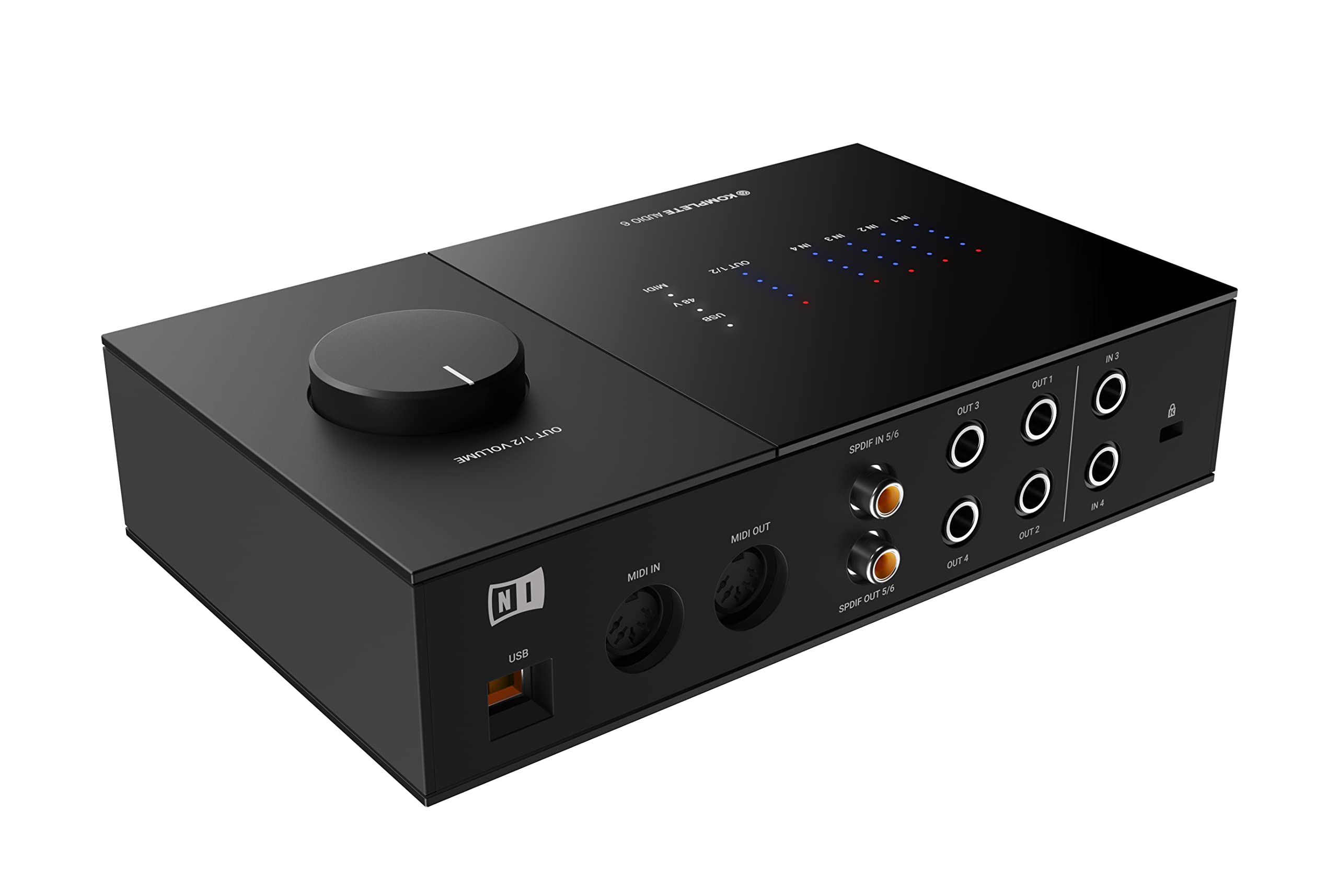
| Adam Audio T5V | U-ART ribbon | ~45 Hz | Tight dispersion, detailed transients, useful rear EQ | Rear port needs space from back wall |
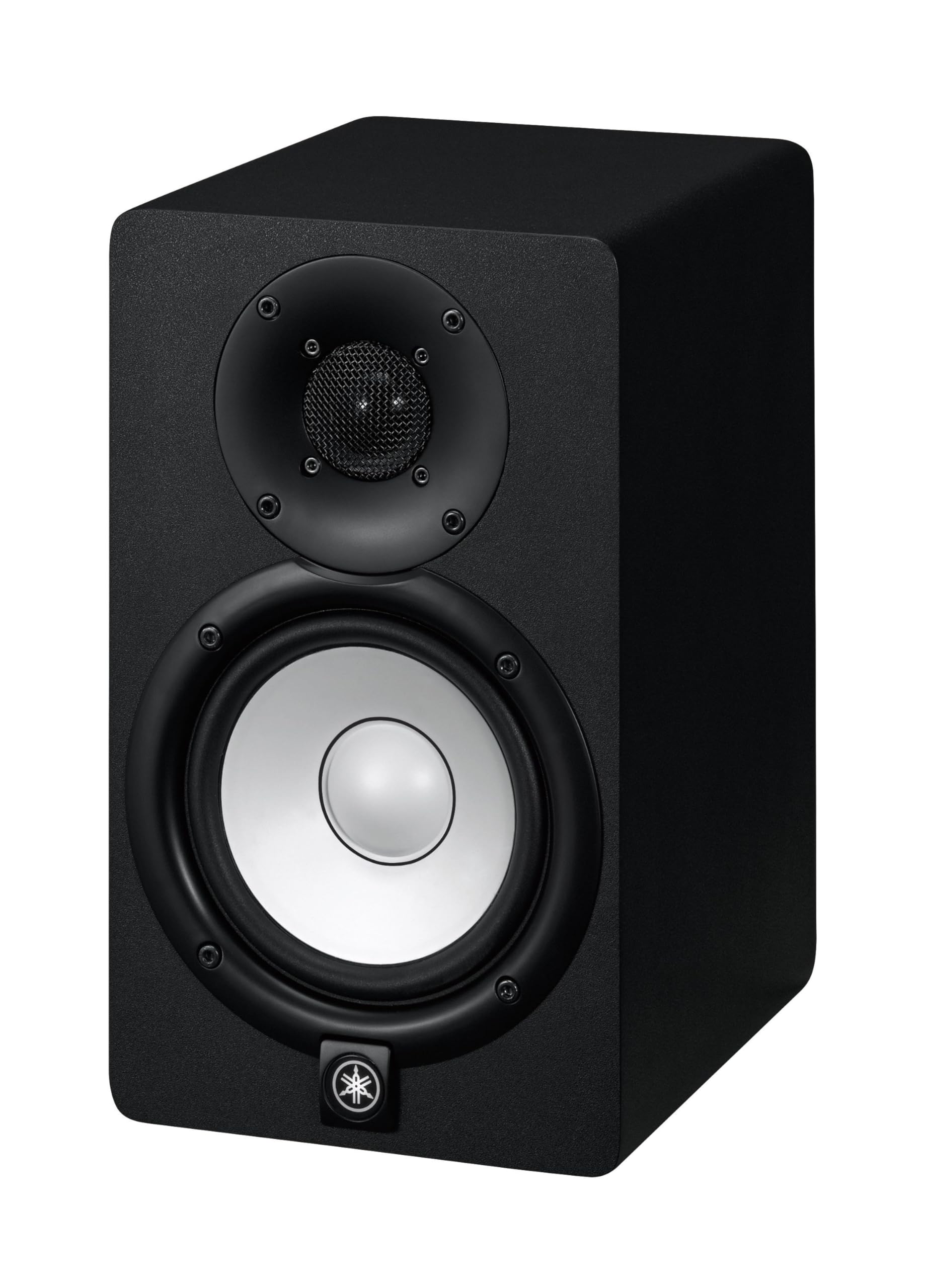
| Yamaha HS5 | 1-inch dome | ~54 Hz | Famously honest mids, conservative low end | Brighter top end can fatigue in small rooms |
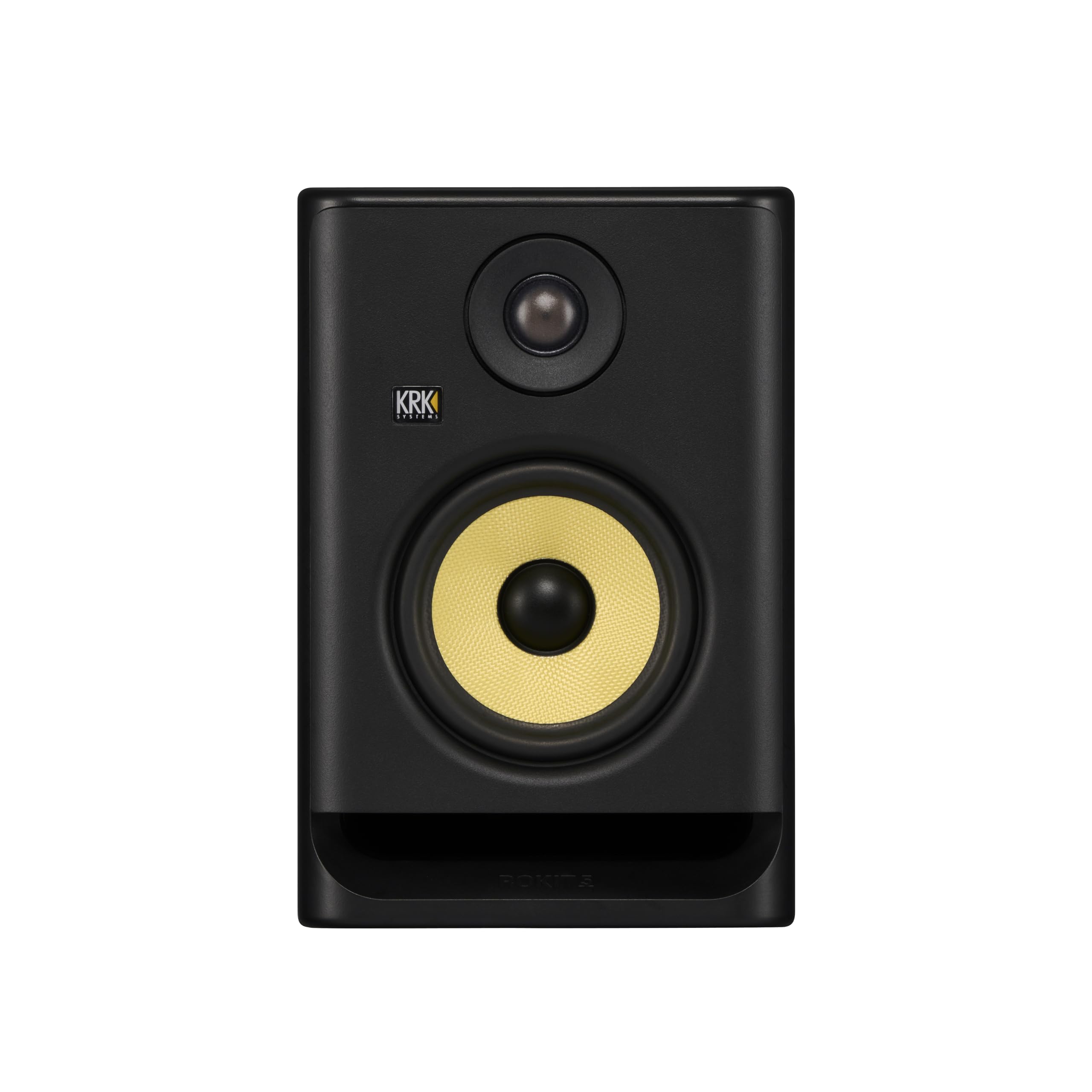
| KRK Rokit 5 G4 | 1-inch Kevlar dome | ~43 Hz | Built-in DSP room correction, hyped low end | Hyped lows mislead in small/closet rooms |
| Adam Audio T7V | U-ART ribbon | ~39 Hz | More low-end authority for sub-bass genres | Often too big for sub-1-meter listening distances |
For most closet studios under 50 square feet, the T5V is the sweet spot. If your closet is larger, or you primarily mix sub-heavy genres like dubstep or trap and don't plan to add a sub, the T7V can be worth the upgrade. For deeper comparisons in the popular 5-inch class, our breakdown of Yamaha HS5 vs KRK Rokit 5 covers how those two compare in similar small-room contexts, and our top studio monitors for home music production in 2026 roundup includes the full 5-inch landscape.
Should you add a subwoofer?
In a closet, the honest answer for most electronic producers is: probably not, at least not initially. A 10-inch sub in a 30-square-foot room will trigger room modes so severe that you'll end up mixing your sub level by what your knees feel rather than what your ears hear. The T5V down to 45 Hz, plus disciplined headphone referencing on a flat pair like the Sennheiser HD 600 or Audio-Technica ATH-R70x, will get you further in a closet than adding a sub to an untreated space.
If you do decide to add a sub later, treat the room first with proper corner bass traps, calibrate the crossover and level with a measurement mic (Room EQ Wizard plus a UMIK-1 is the standard workflow), and place the sub on a decoupling platform to keep it from exciting the floor. Subs in closets work; they just demand discipline.
Where the T5V hits its limits
The adam audio t5v electronic music closet studio formula is not infinitely scalable. If you mix at high SPL, the T5V's amp will run out of headroom before your ears do; sustained mixing above about 95 dB SPL at the listening position is where the cabinet starts to compress and the magic of the ribbon tweeter fades. If you produce orchestral or cinematic electronic music with very wide dynamics, you may want a larger monitor like the T7V or a 7-inch class speaker in a bigger room.
The T5V is also not the right choice if your closet is genuinely untreatable, for example if you rent and can't put anything on the walls. In that scenario you're better off mixing primarily on calibrated headphones and using the T5V for occasional reference and rough balance checks. Our overview on improving audio quality in home studios covers headphone-first workflows that pair well with this approach.
Setting realistic expectations
A pair of T5Vs in a treated closet will not sound like a mastering suite, and that's fine. The goal of a closet studio is reliable translation: the ability to make decisions in your room that hold up in cars, earbuds, club systems, and laptop speakers. The T5V's strength is that it tells you the truth about your mix at the price point. The ribbon tweeter doesn't flatter sibilance, the rear EQ controls let you compensate for the boundary loading you can't avoid, and the modest low-end extension keeps you honest about what you're hearing versus what the room is adding.
Producers who pair the T5V with thoughtful treatment, careful positioning, and a discipline of cross-referencing on headphones and consumer playback systems consistently report mixes that translate. Producers who buy the T5V, set it up against an untreated back wall, and expect the speakers to fix the room are usually disappointed within a week.
Frequently Asked Questions
Is the Adam Audio T5V good for sub-bass-heavy electronic genres like dubstep?
The T5V is honest down to about 45 Hz, which covers most musical sub-bass content but doesn't reach the deepest 30 Hz fundamentals common in dubstep and drill. For those genres you'll want to reference on quality headphones or a calibrated subwoofer. The T5V is still a great mid and high-mid monitor for those styles, but treat its low end as informational rather than authoritative.
How far should the T5V be from the back wall in a closet studio?
Aim for at least 20 cm (8 inches) between the rear port and the back wall. If you can manage 30 cm, even better. Below 15 cm the rear port will couple with the wall and create a 100 to 150 Hz hump that's hard to EQ out. Use the rear-panel LF shelf to compensate if you genuinely can't pull the monitors forward.
Do I need a separate audio interface to run the T5V?
Yes. The T5V is an active monitor with XLR and RCA inputs, but it's not a USB device. You'll need an audio interface to convert your DAW's digital signal to balanced analog. A clean 2-in/2-out interface in the $150 to $250 range is plenty; our guide to top audio interfaces for home studios in 2026 walks through current options that pair well with monitors at this tier.
How loud can I mix on the T5V before it starts to distort?
The T5V is rated at 70W RMS per cabinet (50W LF + 20W HF), which is more than enough for closet-distance listening. In practice you'll get clean sound up to about 100 dB SPL at one meter, but for hearing health and mix accuracy you should keep average listening levels around 75 to 85 dB SPL. The monitor is happiest in its midrange dynamic zone, not pushed near its limits.
Should I get T5V or T7V for an electronic music closet studio?
For closets under about 50 square feet, the T5V is the right choice; the T7V's larger cabinet and deeper extension benefit from listening distances of 1.2 meters or more, which most closets can't provide. If your closet is larger than a typical bedroom closet, or if you mix primarily sub-genre content and won't add a subwoofer, consider the T7V. Otherwise the T5V's smaller footprint and tighter response in a small room win out.
What's the minimum acoustic treatment I need for the T5V to perform in a closet?
At minimum: broadband absorption at first reflection points on both side walls and the ceiling, a panel or moving blanket behind the listening position, and bass trapping in the rear corners. If you can only do one thing first, treat the back wall behind your head, since that's where small rooms create the worst phase issues at the listening position.
Can I use the T5V for podcasting and voiceover work too?
Yes, the T5V's flat midrange makes it well suited for spoken-word editing and mixing. The detailed ribbon tweeter helps you catch mouth clicks, plosives, and edit points that softer tweeters might mask. If you want a fuller view of monitors for spoken-word and mixed-content creators, our comprehensive guide to studio monitors for podcasters covers the broader considerations.
Key Takeaways
- Choosing the right adam audio t5v electronic music closet studio means matching capacity and output ports to your actual devices
- Always check actual watt-hours (Wh), not just watts — runtime depends on Wh, not peak output
- Also covers: t5v small treated room edm
- Also covers: adam t5v near-field closet setup
- Also covers: best monitors closet studio electronic
- Compare price-per-Wh across models to find the best value for your budget