Running an at2020 twitch streamer mechanical keyboard setup is absolutely viable in 2026, but the AT2020 will happily capture every Cherry MX Blue click within arm's reach unless you put a little thought into placement, gain staging, and noise suppression. The AT2020 is a side-address cardioid condenser, which means its tightest rejection point is directly behind the capsule, not above or below it. Position the mic so the rear of the capsule faces the keyboard, keep the diaphragm 6 to 8 inches from your mouth, set conservative interface gain, and stack a software gate plus broadband noise suppression on top. Do those four things and even loud tactile switches drop into the background of your stream mix.
Why the AT2020 Actually Works for Streamers With Loud Keyboards
The AT2020 has been a budget-studio staple for over a decade because it punches well above its price for vocals, but streamers often write it off as "too sensitive" the first time they hear their Holy Pandas detonate in the recording. That sensitivity is real — condensers transduce far more detail than dynamic mics — yet the AT2020's cardioid polar pattern is actually a useful tool against mechanical keyboard noise if you orient it correctly. The capsule rejects sound coming from the rear hemisphere by roughly 20 to 25 dB, so a keyboard sitting behind the mic relative to your mouth is dramatically quieter than one sitting in front of it.
When shopping for at2020 twitch streamer mechanical keyboard, it pays to compare specs, capacity, and real-world runtime before committing.
The catch is that most streamers mount the AT2020 on a desk-clamped boom arm with the mic floating above the keyboard, pointing straight down at it. In that geometry the keyboard is squarely inside the cardioid lobe and you get the worst possible isolation. Flip the orientation so the mic comes in from the side or above-front and aims down at your mouth with the rear of the capsule facing the keyboard, and the same hardware suddenly sounds usable.
Optimal Mic Placement for a Stream Desk
For an at2020 twitch streamer mechanical keyboard rig, the single highest-leverage variable is mic position. A few patterns work well:
- Overhead boom, angled down toward the mouth from the front: Keyboard sits below and behind the rear of the capsule. This is the cleanest geometry but requires a tall boom arm and you'll see the mic on camera.
- Side address from the left or right at chin level: Mic enters from the side of the frame, diaphragm faces your mouth, rear of the capsule points at the keyboard or away from it. Works great for face-cam streams.
- Low-and-up from below the camera: A broadcaster-style position. Good for isolating the mouth but you must remember to angle the rear of the capsule toward the keyboard, not the ceiling.
Whichever you pick, the proximity rule does most of the heavy lifting: doubling the distance from your mouth to the capsule drops your voice level by 6 dB, while the keyboard noise — already farther away — barely changes. Get the capsule within 6 to 8 inches of your lips and you can run lower interface gain, which proportionally reduces every other sound in the room.
The Audio Interface Question
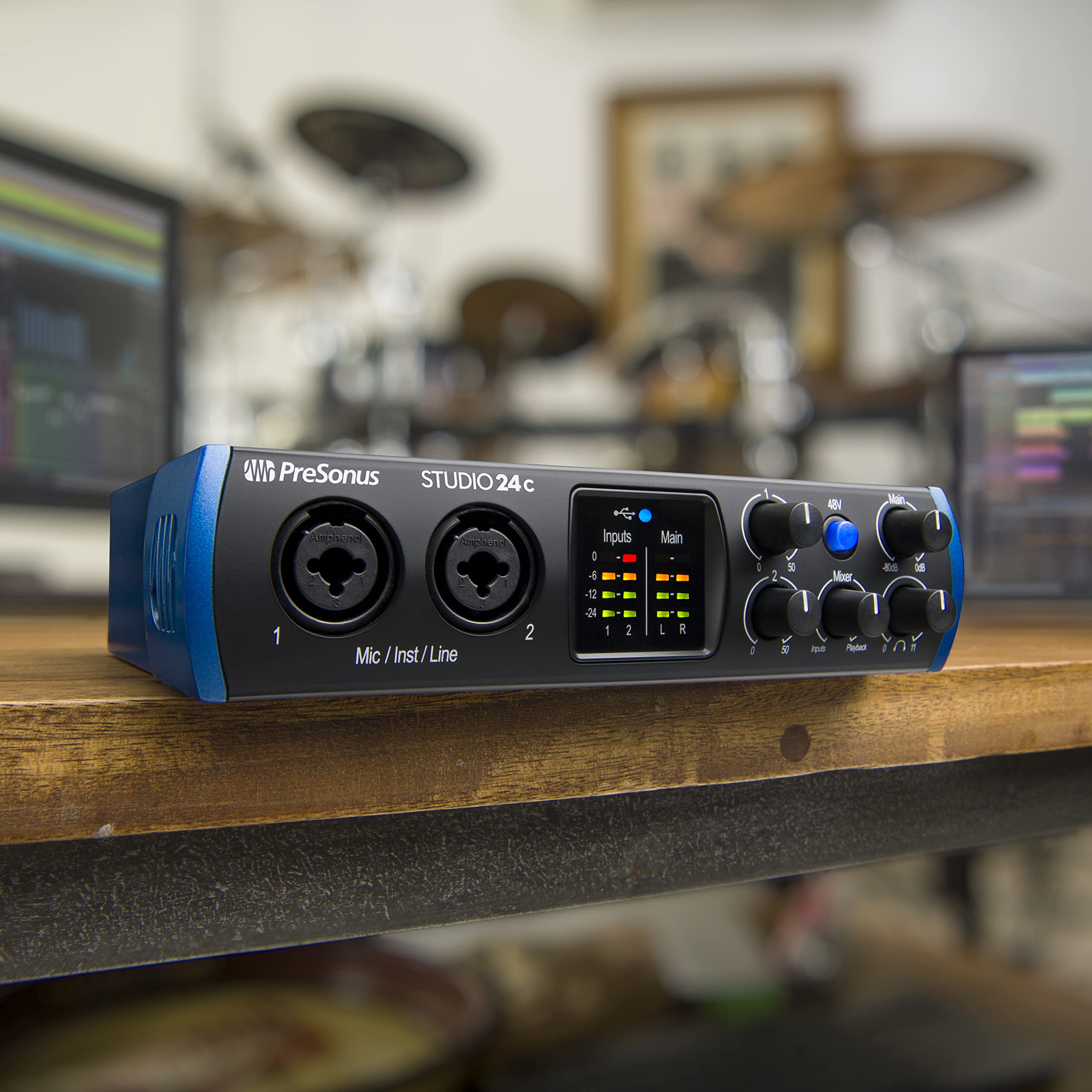
The AT2020 is an XLR condenser that needs 48 V phantom power, so you cannot plug it into a PC directly. You need an audio interface, and the interface you pick has real consequences for keyboard noise. Cheaper interfaces with noisy preamps force you to crank gain on a quiet condenser like the AT2020, which raises the noise floor and makes keyboard clicks more audible relative to your voice. A clean preamp with at least 56 dB of gain lets you sit close to the mic without hiss.
For streamers, a two-channel interface is usually plenty: one channel for the mic, one spare for a guest mic, guitar, or hardware input. If you want a deeper breakdown of preamp quality, headphone amp power, and routing features, our roundup of the best audio interfaces of 2026 walks through the current crop, and the audio interface buying guide covers what specs actually matter for spoken-word work versus music tracking.
Gain Staging That Tames Mechanical Switches
The single most common mistake new streamers make with the AT2020 is treating gain like a volume knob. It is not. The correct workflow:
- Set your interface gain so that loud talking and laughter peak at roughly -10 dBFS in your DAW or OBS meter.
- Speak at normal stream volume — your average level should sit around -18 to -20 dBFS.
- Now type aggressively without talking and watch the meter. If your keyboard hits above -40 dBFS, the gate has work to do but is feasible. If it's hitting -30 dBFS or louder, your mic is too close to the keyboard and no gate will hide it cleanly.
The 20+ dB gap between speaking voice and keyboard noise is what lets a downstream gate cleanly open and close without chopping syllables or letting clicks bleed through. If you cannot achieve that gap through placement alone, reposition before reaching for plugins.
Software Suppression: Gate, RTX Voice, Krisp, NVIDIA Broadcast
Once placement and gain are dialed in, two layers of processing finish the job:
Layer 1 — Noise gate. A simple expander or gate set with a threshold around -35 dBFS, fast attack (1–5 ms), and release of 150–250 ms will mute the channel between sentences. This kills most clacks that happen while you're not speaking. Use OBS's built-in Noise Gate filter, ReaPlugs' ReaGate, or whatever your streaming software offers. Avoid super-aggressive thresholds that snap shut on the tail of your words.
Layer 2 — Broadband noise suppression. NVIDIA Broadcast (free with an RTX card), Krisp, or Elgato's Wave Link AI suppression will neural-net away typing that happens while you're speaking — the part a gate cannot help with. These tools introduce a small amount of vocal artifacting, so keep the strength dial around 50–70% rather than maxed out. Over-suppression makes voices sound watery and underwater.
Layered together, these two stages take a stream that would otherwise sound like a Geiger counter into one where casual viewers won't even register that you're on a mech board.
Choosing the Right Mechanical Switches for Streaming
You can't always pick your keyboard, but if you're building a stream rig from scratch, switch choice is leverage. Roughly from loudest to quietest:
- Clicky: Cherry MX Blue, Kailh Box White, Kailh Box Jade. Loudest possible option. Even with perfect placement, expect some bleed.
- Tactile: Cherry MX Brown, Holy Panda, Boba U4T. Quieter, but tactile bumps still produce a sharp impact noise.
- Linear: Cherry MX Red, Gateron Yellow, Alpaca. Smoother and quieter, especially when lubed.
- Silent linear or silent tactile: Cherry MX Silent Red, Gazzew Boba U4. Built with rubber dampeners on the stem. By far the easiest to stream with.
Adding a dampening foam layer to the keyboard case, swapping to PBT keycaps (which thock less than ABS), and putting a desk mat under the board all stack additional dB reductions. None of this is required to stream successfully with an AT2020, but if you're already shopping for a new board, biasing toward silent switches makes everything downstream easier.
Boom Arm, Shock Mount, and Pop Filter
The AT2020 ships with a basic stand mount that bolts the mic rigidly to whatever is holding it up. On a desk that vibrates every time you slam Enter, that's a problem — those impacts travel up the stand and into the capsule as low-frequency thuds. A shock mount (the AT2020 has aftermarket options that fit its 52 mm body diameter) decouples the capsule from the arm and removes most of that thud.
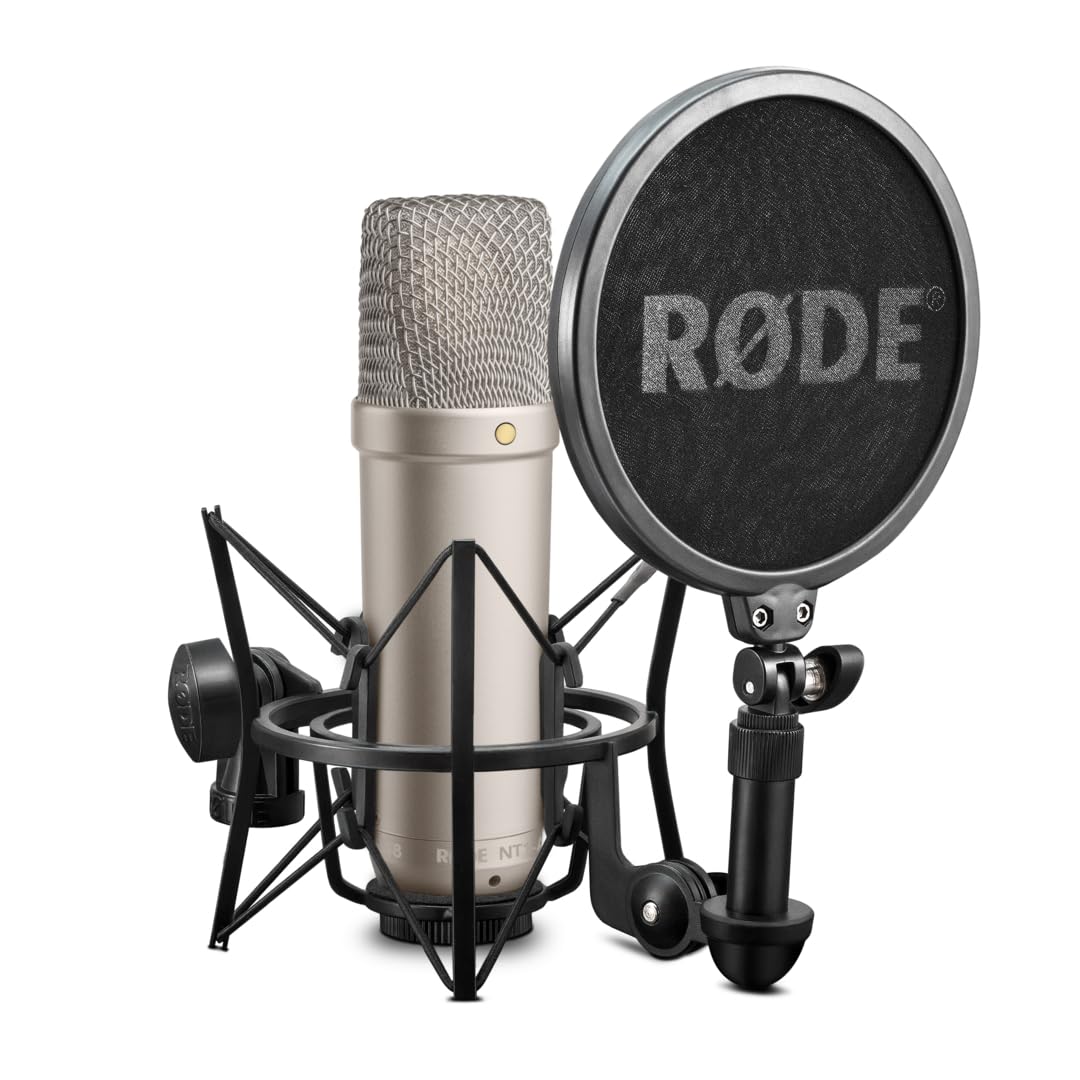
A boom arm with internal cable management, a sturdy desk clamp, and at least 30 inches of reach lets you put the mic exactly where polar-pattern math says it should go rather than where the included stand allows. Add a pop filter or foam windscreen to manage plosives. None of these accessories are exotic and you can find a complete shock-mount-plus-arm-plus-pop-filter kit for under fifty dollars on Amazon.
Room Acoustics Matter More Than You Think
Condensers are sensitive to room reflections, and a typical gaming room — hard desk, monitor stand, blank walls, a window — is reverberant enough that keyboard noise bounces around and re-enters the mic from multiple angles. That re-entry defeats the cardioid pattern's rejection. Even a small amount of acoustic treatment dramatically tightens up the sound: a thick rug under the desk, a fabric room divider behind the monitor, or two or three acoustic panels on the wall behind the mic capsule (where its rear-rejection lobe is pointing) all help.
If you've never treated a room before, our guide to reducing echo in home studios covers the cheap, renter-friendly version. The same principles that make a podcast voiceover sound professional make a streamer's voice sit cleanly above the gameplay and chatter of a mech board.
How the AT2020 Stacks Up Against USB Streaming Mics
Most new streamers' first instinct is a USB mic like the Blue Yeti, which skips the interface entirely. The Yeti is convenient but uses an omnidirectional-capable multi-pattern capsule that, even in cardioid mode, has wider pickup than the AT2020 and a noisier internal preamp. For a keyboard-heavy setup, the AT2020 plus a decent interface is usually a quieter chain. If you're still weighing the two, we put them head-to-head in our Blue Yeti vs Audio-Technica AT2020 comparison, which goes into measured noise floor and rejection behavior side by side.
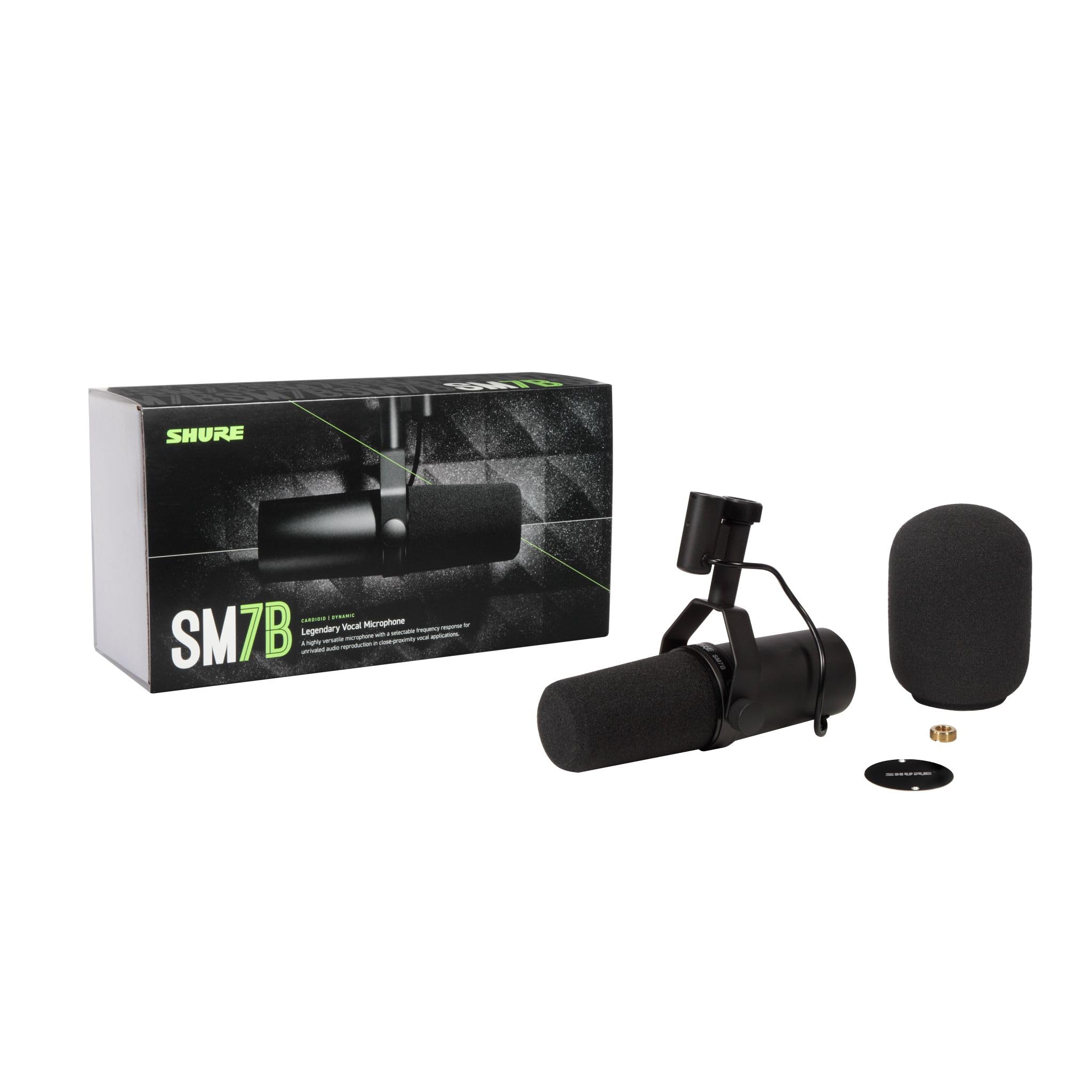
And if you're not married to a condenser at all, a dynamic broadcast mic like the Shure SM7B or RØDE PodMic actively rejects far more room noise than any condenser and is the ultimate "I have a loud keyboard" answer. The tradeoff is cost and required preamp gain. For other options across price tiers, see our roundup of top podcast microphones for 2026 — every mic on that list is also a legitimate streaming choice.
OBS Filter Chain Recommendation
If you want a copy-paste filter stack for OBS or Streamlabs running the AT2020 with a mech keyboard, this works well as a starting point:
- Noise Suppression (NVIDIA Noise Removal or RNNoise) — strength 50–60%.
- Noise Gate — close threshold -42 dB, open threshold -36 dB, attack 5 ms, hold 150 ms, release 200 ms.
- Compressor — ratio 3:1, threshold -18 dB, attack 6 ms, release 60 ms, makeup gain to taste.
- Limiter — threshold -3 dB, release 60 ms.
- Gain — final trim to land your speaking voice around -12 dBFS on the OBS meter.
Tune from there based on your switch type and room. The compressor is what makes the AT2020 sound "broadcast-y" and forgives variation in your distance to the capsule when you lean forward to read chat.
Frequently Asked Questions
Can the AT2020 reject mechanical keyboard noise on its own?
Partially. Its cardioid polar pattern rejects roughly 20–25 dB of sound from directly behind the capsule, so if you orient the rear of the mic toward the keyboard, you get meaningful natural isolation. But the AT2020 is still a sensitive condenser, and you'll need to combine smart placement with a noise gate and broadband suppression to fully hide loud clicky switches.
Do I need an audio interface for the AT2020 to stream on Twitch?
Yes. The AT2020 is an XLR microphone that requires 48 V phantom power, which a PC's mic jack cannot provide. Any USB audio interface with phantom power and at least 56 dB of clean gain will work. Cleaner preamps reduce hiss, which matters because keyboard noise becomes more audible whenever you have to raise the channel gain to compensate.
What's the best mic position to avoid picking up my mechanical keyboard?
Mount the AT2020 on a boom arm so the diaphragm faces your mouth from above-front or from the side at chin level, with the rear of the capsule pointed at the keyboard. Keep the capsule 6–8 inches from your lips. That uses both the cardioid rejection lobe and the proximity advantage of your voice being much closer than the keyboard.
Should I use a noise gate or NVIDIA Broadcast for keyboard clacks?
Use both. A noise gate handles silence between sentences — it slams the mic shut so typing during pauses is gone entirely. NVIDIA Broadcast (or Krisp) handles typing that happens while you're talking by neural-net suppressing keyboard transients without muting the voice. Stacking the two covers different failure modes.
Is the AT2020 better than a USB mic for streaming with a mech keyboard?
For keyboard-heavy setups, generally yes. The AT2020 paired with a quiet interface has a tighter pickup pattern and lower preamp noise than typical USB streaming mics, so loud switches sit further down in the mix. The tradeoff is more cables, the cost of an interface, and a slightly steeper learning curve on gain staging.
What boom arm and shock mount should I use with the AT2020?
Any sturdy desk-clamp boom arm rated for at least 1 kg works — Rode PSA1+, Elgato Wave Mic Arm, and Innogear arms are all popular. For shock mounting, look for an aftermarket mount sized for a 52 mm diameter body (the AT2020's mid-section width). Decoupling the mic from the desk eliminates the low-frequency thuds that travel up the stand every time you bottom out a key.
Which mechanical switches are quietest for streaming with the AT2020?
Silent linears like Cherry MX Silent Red and silent tactiles like Gazzew Boba U4 are by far the quietest off-the-shelf options because they include rubber stem dampeners. Lubed standard linears (Gateron Yellow, Alpaca) are next quietest. Tactile and clicky switches are loudest. Combining silent switches with PBT caps, case foam, and a thick desk mat compounds the noise reduction.
Key Takeaways
- Choosing the right at2020 twitch streamer mechanical keyboard means matching capacity and output ports to your actual devices
- Always check actual watt-hours (Wh), not just watts — runtime depends on Wh, not peak output
- Also covers: at2020 reject keyboard noise
- Also covers: audio technica at2020 streaming setup
- Also covers: at2020 cardioid keyboard clack
- Compare price-per-Wh across models to find the best value for your budget