If you film burpees, kettlebell swings, and sprint intervals in a converted garage or basement, the DJI Mic 2 for HIIT workout filming in home gyms is one of the most practical wireless lavalier systems you can clip to a sweaty tank top in 2026. It handles brutally loud peaks, sudden silence, breathy coaching cues, and clanking plates without distorting, and the magnetic clip survives box jumps better than the alligator clips on most rivals. This guide walks through why it works for high-intensity content, how to dial in your levels, mounting tricks for actual exercise, and what trade-offs to expect against the other wireless options home fitness creators consider.
Why most microphones fail in a home HIIT environment
A home gym is a uniquely hostile recording space. You typically have hard floors (rubber over concrete), reflective walls, a fan or AC running, metal racks, and sound sources that swing from a whispered “three, two, one…” to a shouted “go!” followed by 90kg of barbell hitting the platform. Built-in camera microphones squash the dynamic range and pick up every echo. USB condensers tether you to a desk, and shotgun mics on cameras lose intelligibility the moment you move two meters away or turn your head mid-rep.
When shopping for DJI Mic 2 for HIIT workout filming in home gyms, it pays to compare specs, capacity, and real-world runtime before committing.
Wireless lavalier systems solve the proximity problem because the capsule stays roughly 15–20 cm from your mouth no matter where you are in the room. The hard part is finding a wireless rig that can capture a coach yelling cues at 100+ dB SPL one second and breathing cues at conversational level the next, without you babysitting gain on a tiny touchscreen between sets. That is exactly the gap the DJI Mic 2 was designed to fill.
What makes the DJI Mic 2 a strong fit for loud HIIT filming
The DJI Mic 2 is a two-transmitter, one-receiver wireless kit with internal recording on each transmitter. For home gym influencers, three features matter more than anything else: 32-bit float internal recording, intelligent noise cancellation, and a charging case that doubles as transport and battery top-up. Together they make the DJI Mic 2 for HIIT workout filming in home gyms close to a set-and-forget rig.
32-bit float internal recording is the killer feature
If you have ever finished a workout, opened your footage, and discovered the mic clipped during a grunt or a dumbbell drop, you understand why 32-bit float matters. The format effectively eliminates clipping during editing: you can pull a peak that looks redlined in the timeline back down to a usable level without distortion, and you can lift quiet breath cues without dragging the noise floor up with them. Each transmitter records a backup file at 32-bit float to its internal 8 GB of storage while simultaneously streaming compressed audio to the receiver. When you train at home, that backup is what saves the take after a kettlebell crashes through a transition.
Active noise cancellation tamed for spoken word
DJI’s on-transmitter noise cancellation is more aggressive than most competitors and is genuinely useful for filtering out a box fan or HVAC hum without thinning your voice. For HIIT content, leave it on “Basic” mode for steady-state noise (fan, AC, distant traffic) and off when you are doing close coaching to camera in a quieter set. Strong NC mode can occasionally pump on percussive sounds like rope skipping, so test before a long shoot.
Battery, range, and the charging case
You get around six hours per transmitter and roughly 18 total hours with the case. Range is rated to 250 m line-of-sight; in a typical 30–80 m² home gym you will not approach the limit even shooting from outside the open garage door. The case automatically pairs and tops up transmitters between sets, which is huge when you record several 20-minute workout videos back to back.
How to set up the DJI Mic 2 for high-intensity filming
Even the best wireless system needs a few tweaks before it survives plyometrics. Here is the workflow most home gym creators settle on.
Mounting the transmitter so it does not get destroyed
Forget the alligator clip on a sweaty t-shirt during burpees. Use the included magnetic mount, with the magnet on the inside of your shirt and the transmitter on the outside, ideally on the sternum or just below the collarbone. The magnet is strong enough for jumping jacks and rope work but will release in a fall instead of ripping fabric. For sports bras, route a thin layer of athletic tape over the magnet to keep it flush during inversions. Avoid clipping near a heart rate strap — the rubber can rub the capsule and create handling noise.
Capsule choice and wind protection
The built-in capsule on each transmitter is omnidirectional, which is forgiving when your head turns during a kettlebell swing. The included furry windscreen is overkill indoors but invaluable if you film outside a garage door or with a ceiling fan blasting directly down. For loud breath sounds, the foam windscreen is the better choice — it tames plosives without dulling consonants.
Recommended gain and recording settings
Set the transmitter to record 32-bit float internally and stream to the receiver at −12 dB peak target. On the receiver, dial the output level so peaks from a normal speaking voice hit around −18 dBFS into your camera. Yes, that is conservative, and you will almost certainly want to ride a limiter on your camera, but it gives you headroom for the inevitable “LET’S GO!” shouts mid-AMRAP. Because the internal 32-bit file is your safety net, you can be aggressive with quiet-passage gain on the streamed track without fear.
Camera and acoustics matter as much as the mic
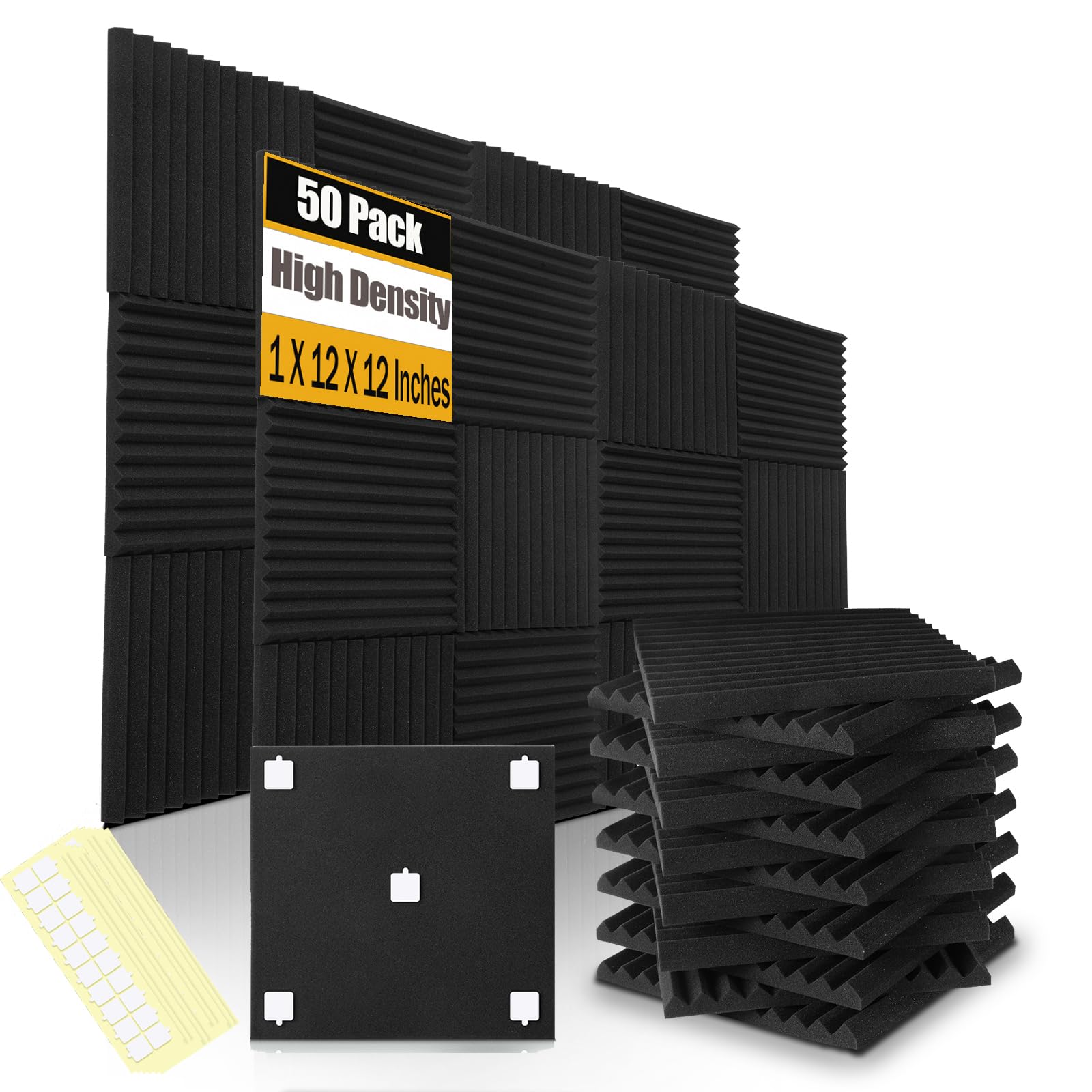
A great wireless system cannot fix a slapback echo. Most home gyms have at least one wall of mirrors and a rubber floor, which together produce a fast, harsh reflection that makes voiceovers sound like they were recorded in a stairwell. A few cheap fixes go a long way: hang a moving blanket on the wall behind the camera, place a rug or yoga mat in the line between your mouth and the nearest reflective surface, and avoid filming directly into a corner. For a deeper rundown of damping techniques, our guide to reducing echo in a home studio applies almost directly to garage-gym setups.
On the camera side, plug the DJI Mic 2 receiver directly into a mirrorless body via the 3.5 mm TRS cable, and set the camera’s mic level to manual at roughly 25–35% so the on-camera preamp is not adding hiss. If you record to a phone, the receiver’s USB-C output bypasses the phone’s preamp entirely — use that whenever possible. More general workflow tips live in our broader piece on improving audio quality in home studios.
How the DJI Mic 2 stacks up against the alternatives
You realistically have three other contenders if you are kitting out a home gym channel: the Rode Wireless GO II, the Rode Wireless Pro, and the Hollyland Lark M2. Each makes different trade-offs.
Rode Wireless GO II
Lighter and slightly smaller than the DJI Mic 2, with internal recording but only at 24-bit, not 32-bit float. Cheaper, but you lose the safety net that matters most when you are screaming “halfway!” at the camera. No charging case included by default. Great budget option if your training style is calmer (yoga, mobility, low-impact strength).
Rode Wireless Pro
The closest direct competitor: 32-bit float internal recording, timecode, and pro features. More expensive, slightly bulkier transmitters, and the magnetic mount is not as elegant. Better choice if you also do narrative content and need timecode sync; otherwise the DJI Mic 2 is more convenient for solo workout shoots.
Hollyland Lark M2
Tiny, almost unnoticeable button-style transmitters that are great for clean-look fitness shots. No 32-bit float, weaker noise cancellation, shorter battery life. Excellent for a polished aesthetic, less safe for loud, unpredictable HIIT audio.
Practical filming tips for HIIT influencer content
Hardware is half the battle. The other half is choreography.
Plan your loudest cues for moments when you are stationary. Even with 32-bit float, a shouted cue while you are mid-burpee creates handling noise on the clip and breath bursts directly into the capsule. Coach into the camera between rounds, then let the workout itself be lower-talk, music-driven footage. This also gives editors clean voiceover beds to drop into B-roll.
Always record a 10-second “room tone” at the start of every shoot with the gym fan, AC, and any music off. This single clip lets your editor mask cuts in the dialog later without obvious silence gaps. With the DJI Mic 2, simply start the transmitter’s internal recording, stand still, and breathe normally for ten seconds before you say a word.
If you film with two presenters — a coach and a client, for example — use both transmitters and pan them slightly left and right in post. A small stereo spread (about 25%) helps viewers parse who is speaking even when both people are short of breath. The Mic 2 receiver can output a stereo track with each transmitter on its own channel, which makes this trivial in editing.
Pair your wireless rig with a small portable recorder as a redundant backup for cornerstone shoots. Our roundup of the best portable recorders in 2026 covers compact options that sit next to your camera and capture room sound for free, giving you a third audio layer if anything goes wrong with the wireless link.
Edge cases the DJI Mic 2 does not solve
No mic is perfect. A few situations where you should plan around the DJI Mic 2 rather than rely on it:
Pool or extreme sweat-through workouts. The Mic 2 is not waterproof. For aquatic content or sauna-adjacent HIIT, you will need a waterproof lav or a boom setup outside the splash zone.
Long-form unattended recording. Six hours of battery is plenty for a workout, but if you stream all day, you need to swap transmitters in the case mid-stream and that introduces audio gaps. Schedule swaps between sets.
Heavy bass music in the background. Noise cancellation handles steady noise well but cannot subtract music with vocals. Run your soundtrack through the camera/DAW separately and add it in post, not in the room.
Frequently Asked Questions
Will the DJI Mic 2 distort when I shout cues like “go” at full volume?
Not on the internal recording. Each transmitter writes a 32-bit float backup file to its 8 GB of internal storage that effectively cannot clip, even if you yell directly at the capsule. The compressed stream to the receiver can hit its peak ceiling, but you simply swap the backup file into your edit for those moments. This is the single biggest reason it beats older 24-bit wireless systems for HIIT filming.
Can I use the DJI Mic 2 with a smartphone for filming a home gym workout?
Yes. The receiver ships with a USB-C output that connects directly to most Android phones and to iPhone 15 or newer. Plug in, open your camera app of choice, and the receiver becomes the active input automatically. For iPhone models with Lightning ports, use the bundled adapter or a Lightning-to-3.5 mm cable. Filming vertically with a wireless lavalier is what most Reels and TikTok fitness creators are already doing.
How do I stop sweat from killing the transmitter during heavy training?
Cover the transmitter with the included furry windscreen even indoors — it doubles as a sweat barrier over the capsule grille. Mount the transmitter on the outside of your shirt with the magnet underneath so the body never directly contacts your skin. If you are doing inversions or heavy floor work, wipe the unit between sets and let it air-dry in the open charging case (lid open) for ten minutes after the shoot. Avoid placing a sweaty unit straight into a sealed gym bag.
Is the DJI Mic 2 better than a shotgun mic on the camera for home HIIT content?
For most home gyms, yes. A shotgun mic on a camera two to three meters away will pick up significant room reflection and lose intelligibility whenever you turn or face the floor. A clipped lavalier 15 cm from your mouth maintains consistent presence regardless of body position, which matters when half your reps involve facing the floor (push-ups, mountain climbers, burpees). Use a shotgun only as a supplementary room-tone mic for ambience.
Do I need acoustic treatment if I am using a wireless lavalier?
Less than you would for a desk-based podcast setup, but some treatment still helps. Lavaliers reduce room sound dramatically because of proximity, but mirrored walls and concrete floors common in home gyms still produce a thin slapback that the mic will pick up. A single moving blanket on the wall behind the camera and a yoga mat near the camera position will tame 80% of the harshness for free.
Can two creators use the DJI Mic 2 at once for partner workout videos?
The standard DJI Mic 2 kit includes two transmitters and one receiver, so two people can record simultaneously on separate channels. The receiver outputs a stereo track with each transmitter on its own side, which makes mixing partner banter and coaching cues straightforward in post. If you frequently shoot with three presenters, you would need a second receiver setup or a different system entirely.
How long does the DJI Mic 2 last on a single charge during a full workout shoot?
Roughly six hours of continuous use per transmitter, with another twelve to eighteen hours of recharge capacity available in the case. For a typical home gym creator filming two or three workout videos in a single morning, you will likely not exhaust a single transmitter’s charge. The case will fully replenish a depleted transmitter in about 65 minutes, so even back-to-back full-day shoots are realistic.
Final take
For home gym influencers in 2026, the DJI Mic 2 hits the sweet spot of safety, portability, and price. 32-bit float recording means a shouted cue or a dropped plate will not ruin your take, the magnetic clip survives plyometrics better than rivals, and the charging case keeps you shooting all day. Pair it with a moving blanket on the wall behind the camera, conservative gain on your receiver, and a planned room-tone capture at the start of each shoot, and you have a setup that punches well above its price for high-intensity content. If you are building out the rest of your rig, our pages on the affiliate disclosure and editorial standards explain how we test and recommend gear.
Key Takeaways
- Choosing the right DJI Mic 2 for HIIT workout filming in home gyms means matching capacity and output ports to your actual devices
- Always check actual watt-hours (Wh), not just watts — runtime depends on Wh, not peak output
- Also covers: DJI Mic 2 fitness creator
- Also covers: home gym wireless mic
- Also covers: DJI Mic 2 HIIT sweat resistance
- Compare price-per-Wh across models to find the best value for your budget