The Focal Alpha 65 Evo for film composer trailer scoring is a strong mid-tier choice because it delivers the low-end weight, midrange neutrality, and stereo focus that orchestral trailer work demands without forcing you into a full soffit-mounted main monitor setup. For composers writing braams, risers, sub drops, and layered brass ostinatos, the 6.5-inch woofer reaches down to roughly 38 Hz, the inverted-dome aluminum tweeter resolves string articulation and percussive transients, and the rear-ported cabinet stays controlled enough to translate to theatrical playback systems. In a treated near-field position, the Alpha 65 Evo gives trailer composers a believable picture of the mix bus before it hits the dub stage.
This guide covers why the Alpha 65 Evo earns a place in a trailer-scoring rig in 2026, where it falls short, how to set it up for orchestral work, and which related gear pairs well with it. There is no forced product list here — just an honest buyer's perspective for film composers chasing accurate orchestral playback at the desk.
Why the Alpha 65 Evo fits trailer scoring
Trailer cues live or die on two things: the impact of the sub-25 Hz region and the clarity of the upper-mid stack where brass, strings, and percussion all collide. A monitor that hypes the low end will trick you into under-writing your sub layer; a monitor that smears the upper mids will hide masking between horns and ostinato strings. The Focal Alpha 65 Evo for film composer trailer scoring sits in a sweet spot — its tuning is closer to flat than most monitors in its price tier, and Focal's aluminum inverted-dome tweeter resolves transients with less smear than a typical silk dome.
For composers working on Epic Music Library-style cues, Two Steps From Hell-adjacent trailer tracks, or studio campaign work, the Alpha 65 Evo's strengths line up well with the genre's demands:
- Sub presence: Real extension into the high 30s Hz means you hear cinematic sub layers (Spitfire HZ Strings low rumble, Heavyocity sub booms) without guessing.
- Brass headroom: 75W bi-amplified power per cabinet handles the SPL of layered Cinebrass + 8Dio Insolidus stacks without compressing.
- Stereo image: A focused sweet spot helps you place divisi strings, harp arpeggios, and percussion across the L/R field accurately.
- Auto standby is now off by default: The Evo generation lets you disable the standby that earlier Alpha owners complained about, which matters for long writing sessions.
What the Alpha 65 Evo cannot do
No 6.5-inch monitor can fully reproduce the 20–30 Hz region a dub stage will. If your trailer cues are going to theatrical release and the music editor is treating your stems as final, you still need a subwoofer (Focal's Sub One or a sealed sub like the Adam T10S) or a regular checkpoint on a calibrated mains system. The Alpha 65 Evo will also reveal — but not flatter — sloppy reverb sends, mud in the 200–400 Hz brass region, and overly bright cymbal layers. That honesty is the point.
If your room is untreated, the rear-ported cabinet will couple with rear-wall reflections and bloat the low end. Plan for at least broadband absorption behind the listening position and bass traps in the front corners. Our soundproofing and treatment guide and the tips for reducing echo cover the basics for a composer's writing room.
Setting up the Alpha 65 Evo for orchestral work
Placement and aim
For trailer scoring at the desk, place the Alpha 65 Evo on isolation pads (IsoAcoustics ISO-155 or similar) with the tweeters at ear height, forming an equilateral triangle with your listening position — roughly 1.2 to 1.5 meters per side. Toe them in so the on-axis tweeter is aimed just behind your head. Keep the rear of the cabinet at least 25 cm from the rear wall to avoid bass build-up from the port.
Back-panel switches
The Evo series has shelf adjustments for LF (-6 dB to +6 dB) and HF (-3 dB to +3 dB) plus a desk EQ to compensate for reflections off a hard worktop. For trailer work in a small room, start with LF at -2 dB and HF at 0 dB, then tune by ear with a reference cue you know well (Hans Zimmer's "Time," Audiomachine's "Guardians at the Gate," or any cue you've heard in a dubbed environment).
Calibration level
Use a pink-noise file at -20 dBFS and a SPL meter to set 79 dB C-weighted at the listening position per monitor (158 dB combined isn't a thing, but the per-speaker calibration matches the small-room equivalent of dub stage K-Bridge calibration). This gives you a consistent loudness reference across sessions — critical when trailer briefs ask for "loud" without giving a target LUFS.
How the Alpha 65 Evo compares to its closest rivals for trailer scoring
| Monitor | LF extension | Tweeter | Power (per cab) | Best for trailer composers who... |
|---|---|---|---|---|
| Focal Alpha 65 Evo | ~38 Hz | Aluminum inverted dome | 75W bi-amp | Want neutral mids and resolved transients on brass and strings |
| Adam Audio A7V | ~41 Hz | X-ART ribbon | 130W bi-amp | Need extreme top-end air for cinematic strings and FX layers |
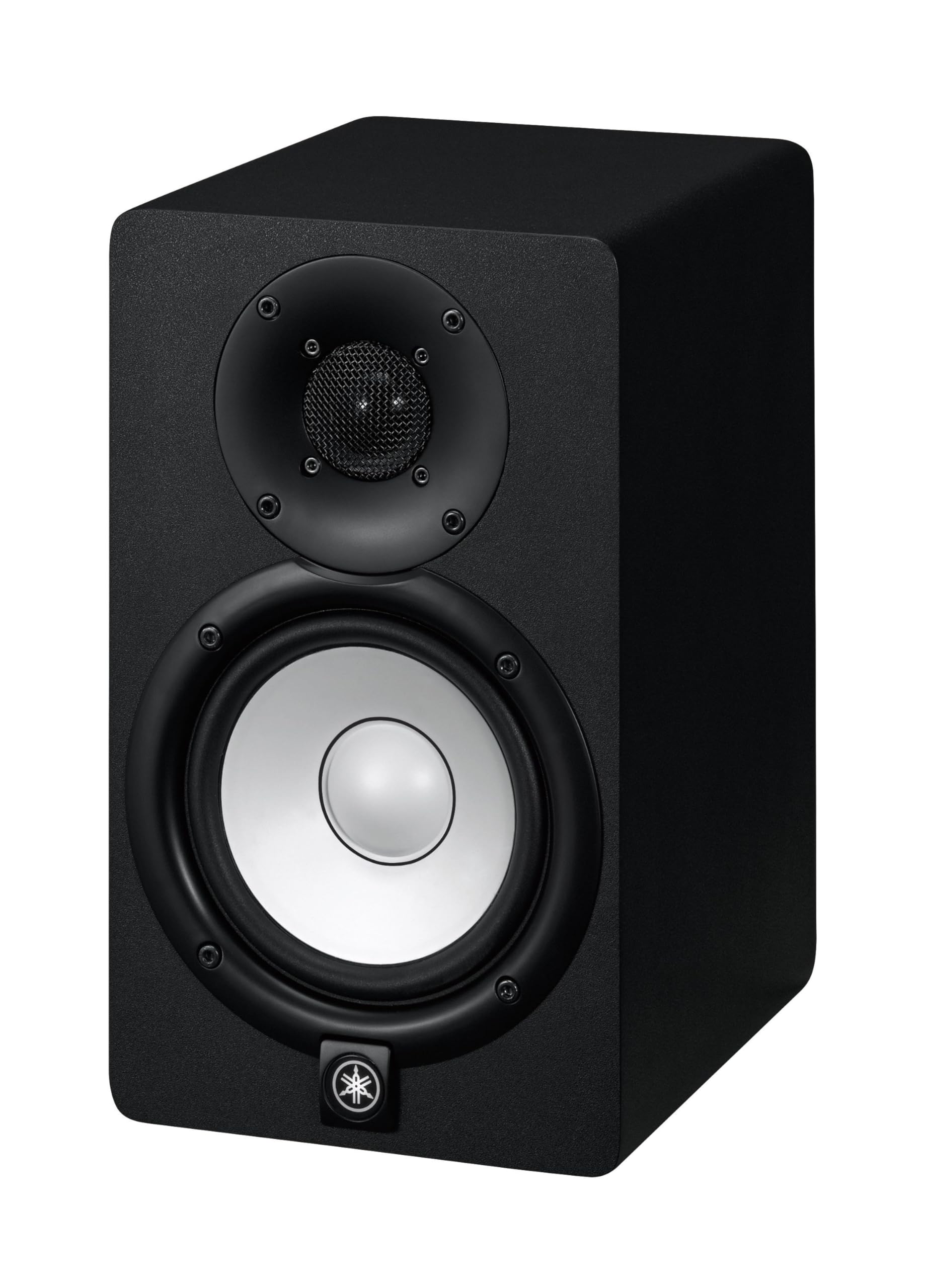
| Yamaha HS7 | ~43 Hz | 1" dome | 95W bi-amp | Want a known reference, will pair with a sub for sub-bass cues |
| Genelec 8030C | ~54 Hz | 0.75" metal dome | 50W + 50W | Mix in small rooms and rely on a sub for trailer low end |
| Neumann KH 80 DSP | ~57 Hz | 1" titanium dome | 120W + 70W | Need room-corrected playback and will run a calibrated sub |
The Alpha 65 Evo's edge is that you get genuine sub-bass into the high 30s Hz from a single cabinet, at a price point well below the 8-inch competition. For composers without the budget or room for an 8-inch monitor plus a calibrated sub, it covers the most useful frequency window for trailer scoring.
What you still need around the monitors
Headphone reference
Trailer cues often get reviewed by music editors and directors on headphones, AirPods, and laptop speakers before they ever hit a dub stage. Keep a closed-back reference on hand for late-night sessions and translation checks — our 2026 studio headphones guide covers the closed-back options that pair well with neutral monitors like the Alpha 65 Evo.
Audio interface
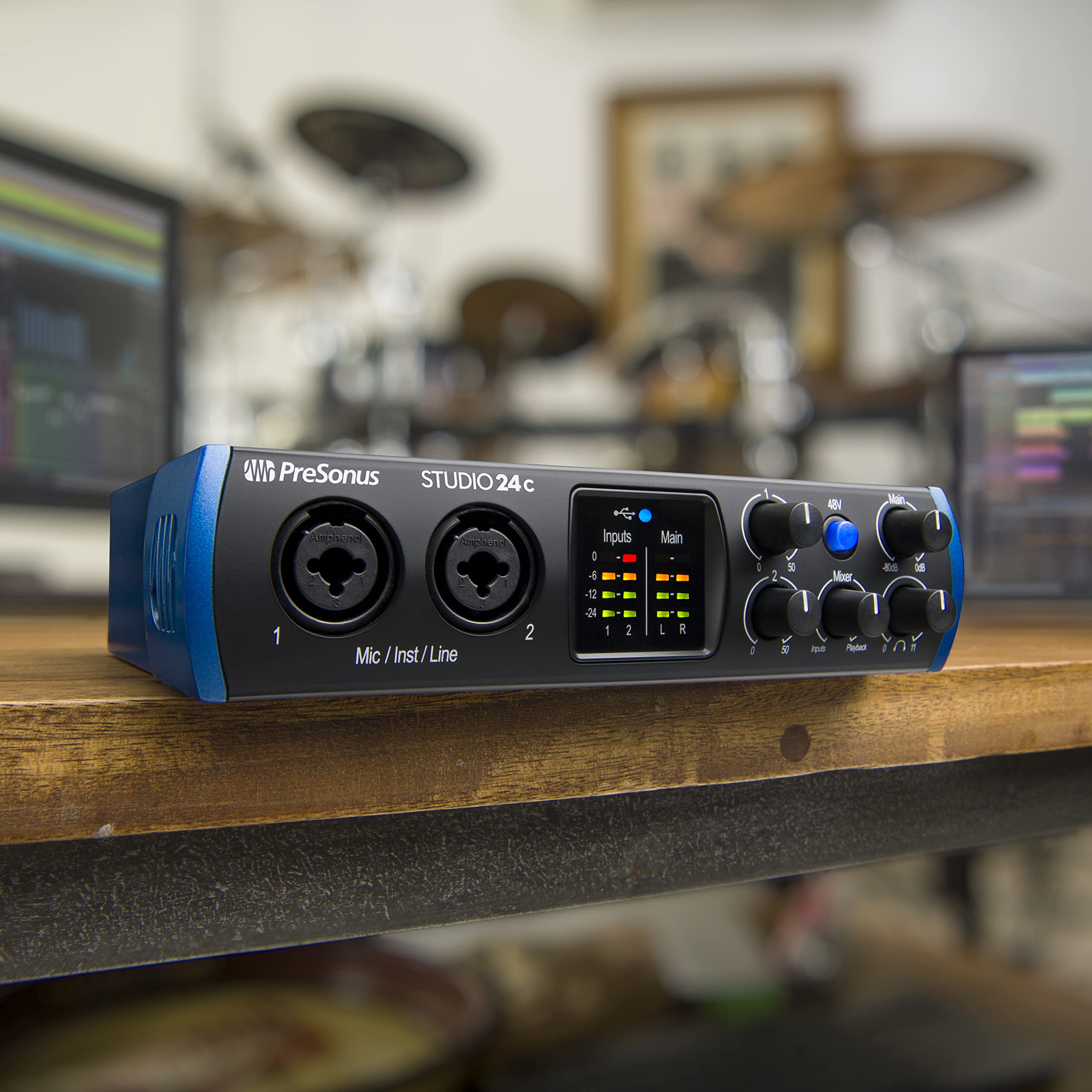
The Alpha 65 Evo accepts XLR and TRS inputs. Drive them from balanced outputs on an interface that has the headroom and DA quality to match the monitor's resolution. A 2026 interface buyer's lens lives in our best audio interfaces of 2026 roundup; for trailer composers running large orchestral templates, look for interfaces with monitor-controller features, Dante or AVB expansion, and at least 4 outputs so you can route a sub or alt-monitor pair.
Sub-bass extension
If the budget allows, a calibrated subwoofer is the single biggest upgrade for trailer work. Focal's own Sub One is the obvious pair (matching crossover, matching house sound), but any sealed sub crossed at 60 Hz with a real high-pass back into the Alpha 65 Evos works. Without a sub, do your final sub-bass decisions on headphones with real extension, then re-check on the monitors with the LF shelf flat.
Workflow tips specific to trailer scoring
Reference inside the DAW
Drop two or three commercial trailer cues into a reference bus in Cubase, Logic, or Studio One and gain-match them to your work. The Alpha 65 Evo's neutrality makes A/B comparisons useful — you'll hear when your braam is 3 dB too quiet relative to a Two Steps From Hell reference, or when your high strings are masking your brass stab.
Watch the 60–80 Hz mud
The most common trailer mix problem on 6.5-inch monitors is a buildup around 60–80 Hz from doubled sub layers, kick samples, and low brass. The Alpha 65 Evo will show this, but in an untreated room you may blame the speakers. Sweep with a parametric EQ on the master bus first to find the culprit, then fix the source.
Don't mix into the limiter
Trailer briefs almost always ask for loud, but if you crush -6 LUFS short-term at the writing stage you lose the transient detail the Alpha 65 Evo's aluminum tweeter is showing you. Keep your master fader headroom and let the trailer house's mastering engineer handle final loudness.
Who should look elsewhere
If you write primarily for streaming (Netflix, Apple TV+) and your mixes always go through a re-recording mixer with a calibrated room, you can probably get by with a smaller monitor like a Genelec 8030C or Neumann KH 80 plus a sub. If you write trailer-style cues for game cinematics that will be heard on consumer soundbars and TV speakers, you may want a midrange-forward monitor that exposes phone-speaker translation issues earlier. And if your room is genuinely tiny (under 8 m²) the Alpha 65 Evo's rear port may cause more bass problems than its extension solves — consider the sealed 5-inch options instead.
If you're earlier in your career and still building out the room before the monitors, our guides on setting up an ideal home studio and improving home studio audio quality will save you from spending on speakers a bad room can't reveal.
Bottom line
For 2026, the Focal Alpha 65 Evo for film composer trailer scoring remains one of the most defensible monitor choices in the sub-$1500/pair tier. It gives you enough low end to write convincing sub layers, enough top-end resolution to balance brass and strings without smearing, and enough power to keep up with the SPL trailer cues demand. Pair it with proper treatment, a sub if your room can handle one, and a closed-back reference for translation checks, and it will get your cues into the ballpark of the dub stage before the mixer touches them.
Frequently Asked Questions
Is the Focal Alpha 65 Evo loud enough for orchestral trailer composers in a medium room?
Yes. At 75W bi-amplified per cabinet with a 6.5-inch woofer, the Alpha 65 Evo hits around 109 dB peak SPL per pair at 1 meter — enough for a 12–18 m² writing room. For trailer cues you'll typically reference at 79 dB C-weighted calibrated and only push to 85–90 dB for impact checks, so headroom is generous. Larger rooms above 25 m² will benefit from the Alpha 80 Evo or an 8-inch monitor instead.
Do I still need a subwoofer with the Alpha 65 Evo for trailer scoring?
If your cues end up on a theatrical dub stage, yes — no 6.5-inch monitor reproduces 20–30 Hz at reference SPL. The Alpha 65 Evo gets you to roughly 38 Hz, which covers most cinematic sub layers, but a calibrated sub crossed at 60–80 Hz removes the guesswork. For streaming or trailer house deliveries that are mastered later, you can often work without a sub if you cross-check on headphones with real low-end extension.
How does the Alpha 65 Evo compare to the Yamaha HS7 for film composers?
The HS7 has slightly more upper-mid honk that some composers find useful for vocal-led cues but tiring on orchestral material. The Alpha 65 Evo's tuning is flatter through 1–4 kHz, and its aluminum tweeter resolves brass transients with less smear than the HS7's soft dome. For pure orchestral trailer work, the Focal is the more revealing choice; for general-purpose monitoring on a tighter budget, the HS7 is still a fair pick.
Can I use the Alpha 65 Evo in a small untreated bedroom studio?
You can, but you'll be fighting the room. The rear bass port and 38 Hz extension will couple with untreated rear walls and corners and bloat the low end. At minimum add broadband absorption behind your listening position, bass traps in the front corners, and consider engaging the LF shelf at -2 dB on the back panel. If the room is under 9 m² with no treatment, a sealed monitor or a smaller ported design may behave better.
What audio interface should I pair with the Alpha 65 Evo for orchestral templates?
Look for balanced TRS or XLR outputs, low output impedance, monitor controller features, and at least 4 outputs so you can route a sub or an alt-monitor pair. RME, Apollo, Antelope, and Audient interfaces all drive the Alpha 65 Evo well. For trailer composers running 500+ track templates, an interface with Dante or AVB expansion to slave machines is worth the budget.
Are the Alpha Evo monitors better than the original Alpha series for film work?
Yes. The Evo update brings selectable auto-standby (off by default if you want), revised tuning, the back-panel EQ for LF/HF and desk reflections, and slightly tighter low-end control. Original Alpha owners reported standby cutting in during quiet writing passages — that's solved. If you're choosing between a used original Alpha 65 and a new Evo at similar prices, take the Evo.
How long should I burn in the Alpha 65 Evo before critical listening?
Focal recommends roughly 20 hours of playback at moderate level before the woofer surround and tweeter loosen into final character. Most composers report the sound stabilizing within the first week of normal use. Don't make permanent decisions about LF shelf settings or sub crossover in the first 48 hours — the low-end may tighten noticeably as the cabinet settles in.
Key Takeaways
- Choosing the right Focal Alpha 65 Evo for film composer trailer scoring means matching capacity and output ports to your actual devices
- Always check actual watt-hours (Wh), not just watts — runtime depends on Wh, not peak output
- Also covers: Alpha 65 Evo film composer
- Also covers: Focal Alpha 65 Evo orchestral mixing
- Also covers: trailer music composer monitors
- Compare price-per-Wh across models to find the best value for your budget