For mobile mastering engineers working out of hotel rooms, the Genelec 8010A mobile mastering hotel room workflow has quietly become a gold standard. The 8010A is a 3-inch active two-way monitor weighing just 1.5 kg per side, designed by Genelec specifically as a portable reference that survives suitcase abuse, fits on a desk hutch or nightstand, and still delivers the tonal honesty mastering work demands. In a transient environment with bad acoustics, asymmetric walls, and HVAC noise, the 8010A's narrow dispersion, sealed Iso-Pod base, and built-in room compensation switches help you make decisions that translate when you get home.
This buyer's guide is written for the engineer who lands at 11pm, sets up on a desk between a TV and a kettle, and needs to approve a master by morning. We will cover why the 8010A specifically suits this use case, how to set it up in an untreated room, what to pair it with, and the realistic limitations you should plan around.
The best Genelec 8010A mobile mastering hotel room for your situation depends on how you plan to use it and where.
Why the Genelec 8010A suits hotel-room mastering
Mastering on the road is a problem of trust. You are not trying to recreate your home room — you are trying to make decisions that you can stand by once you are back in front of your reference rig. The 8010A earns that trust through four design choices that matter more in a hotel than in any treated studio.
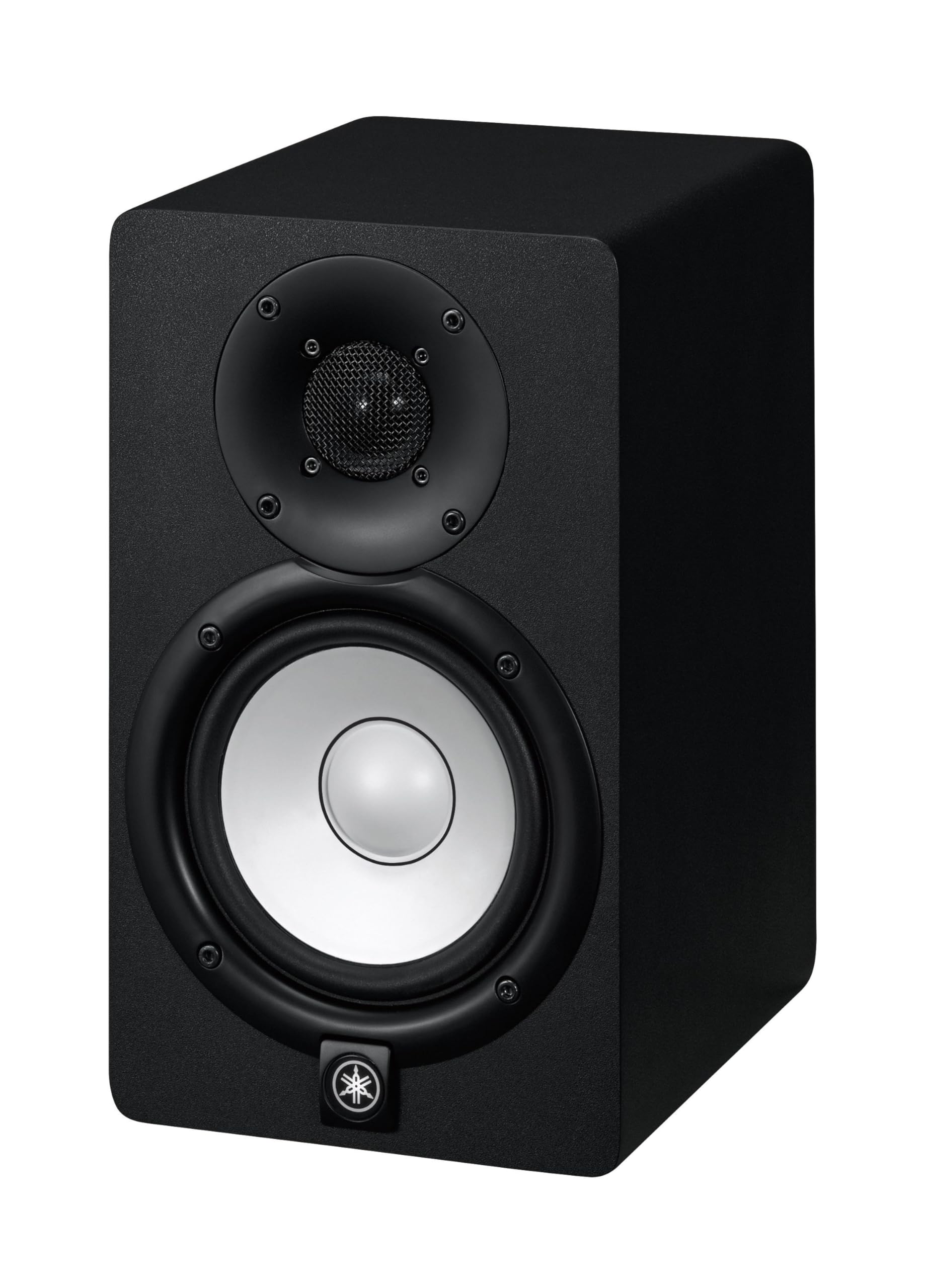
Narrow, controlled dispersion. The 8010A uses Genelec's Directivity Control Waveguide on a 3/4-inch metal-dome tweeter mated to a 3-inch woofer. The horizontal pattern is tight, which means less energy splashing off the parallel walls of a typical hotel room. Less reflection energy means the direct sound dominates at the listening position, and the room lies to you less.
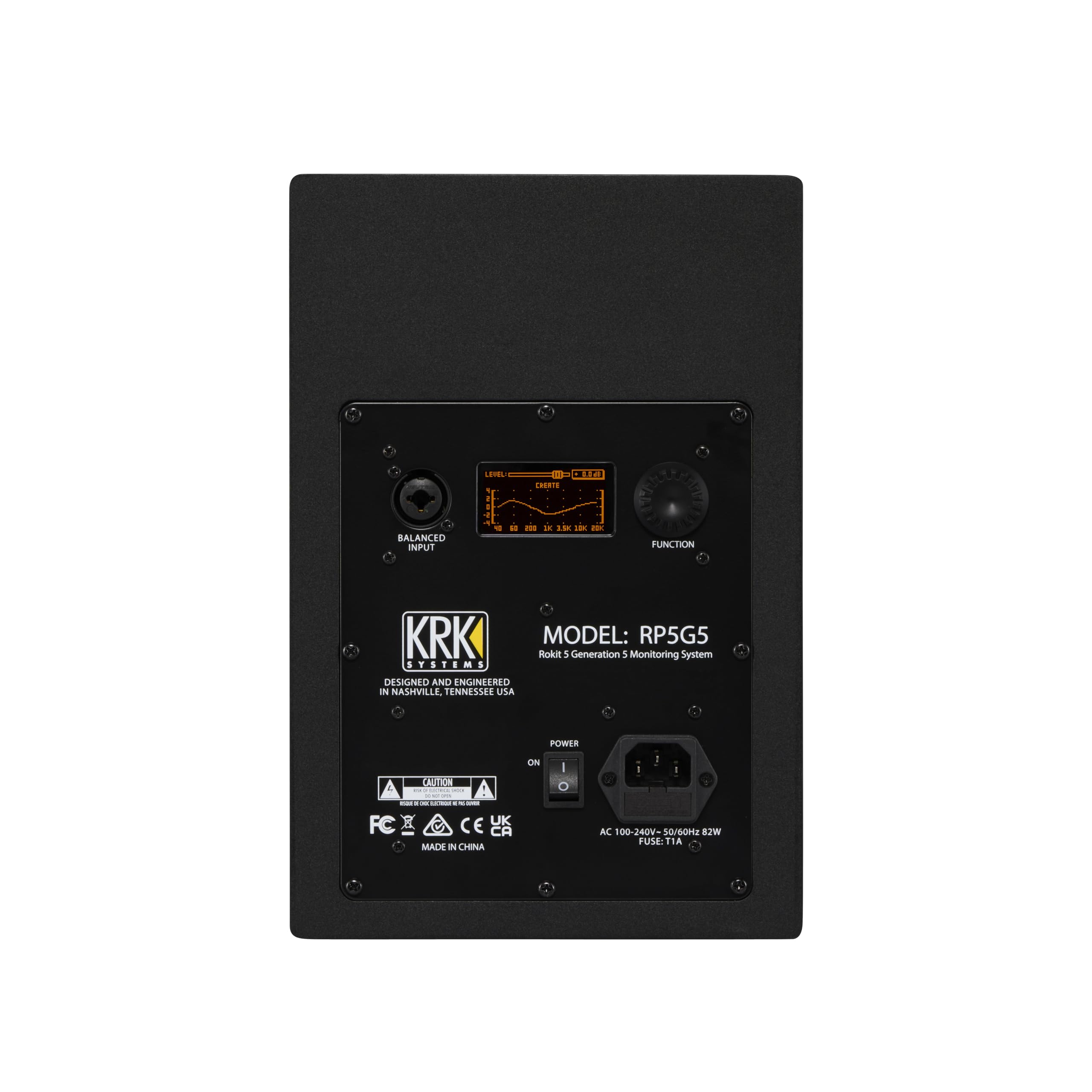
Room-response compensation on the back panel. There are three DIP switches: bass tilt (-2 dB and -4 dB), treble tilt (-2 dB), and desktop compensation (-4 dB at 160 Hz). The desktop switch alone makes a real difference when the speakers are sitting on a wooden hotel desk that boosts low-mid energy by 4-6 dB. You can flip this in seconds without measurement gear.
True full-range honesty within its band. Genelec specs the 8010A at 67 Hz to 25 kHz (-6 dB). That is not full-range — you cannot judge sub-bass on these. But within the band they cover, the frequency response is genuinely flat, and group delay is well-behaved. You are not getting a hyped consumer signature dressed up as a monitor.
Physical robustness. Die-cast aluminium enclosure. The cabinet itself is a structural part of the design, not a vinyl-wrapped MDF box that loosens when an airline gorilla drops it. Genelec rates them for transport, and engineers routinely pack pairs into a single Pelican-style case as carry-on.
The realistic limitations
The 8010A is not a magic wand. You are not going to make low-end EQ calls below ~70 Hz with confidence on these, full stop. For final low-end work you still need either a treated room with proper monitoring or a familiar set of reference headphones to cross-check. A pair of Sony MDR-7506 or Audio-Technica ATH-M50x is the standard travel insurance — see our ATH-M50x vs MDR-7506 comparison for which fits your workflow better.
Maximum SPL is 96 dB at 1 m per pair. That is plenty for nearfield mastering, which should be done at around 75-83 dB SPL anyway, but it is not a tracking-loud monitor for a band rehearsal.
And the cost-per-pair is high relative to the driver complement. You are paying for the engineering, calibration, and build, not for the cone area. If your work does not actually require reference-grade portable monitoring — say you are a hobbyist mixing in a treated room — the value proposition tips elsewhere. Check our 2026 studio monitor roundup for context on where the 8010A sits in the broader market.
Setting up the 8010A in a hotel room
The room is the variable you cannot control. The setup is the variable you can. Five things to get right:
1. Symmetry first, everything else second. Find the most symmetric axis in the room — usually facing the long wall, not the bed wall. If the desk is jammed in a corner, drag it out 30-40 cm. Asymmetric early reflections destroy stereo imaging faster than any other problem.
2. Equilateral triangle, ears at tweeter height. 60-80 cm between the monitors and the same distance to your ears. The 8010A's included Iso-Pod base tilts; angle the tweeters at your ears. Hotel chairs are often the wrong height — sit on a pillow if you have to.
3. Pull them away from the wall. Even 20-30 cm of breathing room behind the monitor helps reduce SBIR (speaker-boundary interference response) cancellations in the low-mids. If you cannot, engage the -4 dB bass tilt switch.
4. Flip the desktop switch. If they are on the desk surface (not on stands), engage the -4 dB at 160 Hz desktop compensation. This is the single biggest correction available on the back panel and it is almost always correct for hotel-desk placement.
5. Reference, reference, reference. Bring 5-10 commercial tracks you know intimately at 24-bit / 44.1 or 48 kHz. Play them through the same chain you are mastering through. If your reference tracks sound right, your masters will translate. If they sound wrong, recalibrate your expectations before you touch the master.
For a deeper treatment of small-room acoustics that applies even to temporary setups, see our guide on reducing echo in untreated rooms — many of the principles (soft furnishings near reflection points, throwing a duvet on the bed for diffusion, keeping the laptop screen out of the direct path) transfer directly to a hotel.
What to pack with the 8010A
The monitors are step one. The mobile mastering rig as a whole needs three other things to work end-to-end.
A clean, low-jitter audio interface with balanced outputs. The 8010A accepts XLR balanced input only — no RCA, no TRS. So your interface must have XLR outs (or you need short TRS-to-XLR cables). Most mastering engineers travel with a high-resolution USB-C interface; our 2026 audio interface guide covers the current top picks for mastering-grade portable converters.
Reference headphones for low-end verification. Non-negotiable. The 8010A does not give you sub-bass.
Short, well-made XLR cables. Two 1-metre balanced XLRs. Coil them properly. A loose cable is the most common cause of a phantom "intermittent fault" that ruins a session at 1am.
Optionally: a measurement microphone and a laptop running Room EQ Wizard or Sonarworks SoundID Reference. If you take three measurements per hotel and apply correction, you remove a huge amount of the residual room error.
How the 8010A compares to its obvious alternatives
The 8010A is not the only small portable monitor on the market. Two questions come up constantly: why not a slightly larger Genelec, and why not a cheaper competitor?
| Monitor | Woofer | LF (-6 dB) | Max SPL | Weight (each) | Best for |
|---|---|---|---|---|---|
| Genelec 8010A | 3 in | 67 Hz | 96 dB | 1.5 kg | Carry-on portable mastering reference |
| Genelec 8020D | 4 in | 62 Hz | 100 dB | 3.7 kg | Small treated room, not really carry-on |
| IK iLoud Micro | 3 in | 55 Hz (DSP-extended) | 97 dB | 0.9 kg | Budget portable, less linear top end |
| Neumann KH 80 DSP | 4 in | 57 Hz | 108.8 dB | 3.0 kg | Fixed nearfield with auto-cal, heavy for travel |
The 8010A wins specifically on the carry-on portable mastering reference axis. The 8020D is a better-sounding speaker but it is more than twice the weight per side and you will feel that in your shoulder by the second airport. The iLoud Micro is genuinely impressive for the money but its DSP-extended bass is a useful illusion, not a reference truth, and the top end is less neutral. The KH 80 DSP is arguably the best small-room monitor on the market — but it expects to live on stands in a known room and be calibrated, not bounced through baggage handling.
Workflow tips for hotel-room mastering sessions
A few habits that separate engineers who can deliver from the road from those who can't:
Master at low SPL. 75 dB SPL at the listening position. Hotel walls are thin and you will get a noise complaint at 85 dB, which ends your session. Low-SPL mastering also reduces ear fatigue over an 8-hour day.
Take breaks every 45 minutes. The acoustic uncertainty of a hotel room makes ear fatigue compound faster than in your home room. Step outside, hear traffic, reset your reference.
Cross-reference on phone speaker and earbuds. Both as a translation check and as a reality check on your own perception.
Sleep on it if you can. A 24-hour delay between the "final" master and the delivery click is the single biggest quality control you can give yourself. If the deadline allows, deliver in the morning, not at midnight.
Document your room. Photograph the setup. Note the desk material, distance to walls, and what switches you set. If you revisit the same hotel, you will save 30 minutes next time.
Is the 8010A worth it for you?
If you are a working mastering or mixing engineer who actually travels for work — touring with an artist, working between two cities, attending sessions on location, or running mastering revisions from the road — the 8010A is one of the few tools that genuinely lets you maintain professional standards in a non-studio environment. The cost is justified by the work it protects.
If you are an aspiring engineer who works from one home room and wants a future-proof monitor, you would be better served by a 5-inch monitor in your treated room and a good pair of reference headphones for occasional travel. See our coverage of studio monitors for home music production for that scenario.
And if you do most of your mobile work in well-known spaces — a familiar Airbnb, a partner studio you visit monthly — measurement-based correction software on a slightly larger monitor often beats a pure portable solution.
Frequently Asked Questions
Can you really master a commercial release on Genelec 8010A monitors in a hotel room?
Yes, with caveats. Working mastering engineers do it routinely for revisions, vocal-up edits, mid-cycle approvals, and time-sensitive deliveries. For a from-scratch full master of a complex low-end-heavy genre, most engineers would prefer to do the final low-end pass on their main rig or against a measured reference. The 8010A is honest enough for confident decisions above ~70 Hz; you supplement below that with reference headphones and translation checks.
How do I deal with hotel-room bass buildup on the 8010A?
Three steps. First, engage the -4 dB at 160 Hz desktop compensation switch on the back of the speaker if it is sitting on a desk surface. Second, pull the monitors at least 20-30 cm from the back wall and avoid corners. Third, if the room is still boomy, engage one of the bass tilt switches (-2 dB or -4 dB). If you have a measurement mic and a laptop, run Sonarworks or REW to confirm.
Do I need a subwoofer with the Genelec 8010A for mastering?
In a permanent setup, yes — the matching 7040A or 7050C sub extends the system to genuine reference range. For mobile hotel-room work, no, because a sub will not behave predictably in an untreated space and you cannot reasonably travel with one. Instead, cross-check sub-bass decisions on reference headphones like the Sony MDR-7506 or a pair of Audeze isolation cans.
Will the 8010A survive being flown as carry-on?
The aluminium chassis is genuinely transport-rated and a pair fits in a 40-litre carry-on with foam padding or a custom-cut case. Many engineers use a small Pelican 1510 with cubed foam. The cable connectors are the most vulnerable parts; coil cables loosely and pad the back panels. Genelec sells official soft cases as well.
What audio interface should I pair with the 8010A for mobile mastering?
You need balanced XLR outputs and clean, low-noise converters. Bus-powered USB-C interfaces from RME, Apogee, Universal Audio, and Audient all have suitable options. See our 2026 audio interface guide for current picks. Avoid interfaces with only TRS outputs unless you are comfortable with a TRS-to-XLR adapter cable.
Is the Genelec 8010A better than the IK Multimedia iLoud Micro Monitor for travel?
For reference-grade mastering, yes — the 8010A is more linear, more honest in the midrange, and built for professional transport. The iLoud Micro is a better value for content creators, podcasters, and producers who need a portable check monitor rather than a primary mastering reference. The DSP bass extension in the iLoud is impressive but not a substitute for the 8010A's measured neutrality.
How long do Genelec 8010A monitors last?
Genelec monitors are known for 15-20+ year service lives with normal use. The amplifier modules and drivers are serviceable, and Genelec's support for legacy models is unusually strong. For a mobile engineer, the long service life is a meaningful part of the value calculation — the cost per session over a decade of travel is modest.
Key Takeaways
- Choosing the right Genelec 8010A mobile mastering hotel room means matching capacity and output ports to your actual devices
- Always check actual watt-hours (Wh), not just watts — runtime depends on Wh, not peak output
- Also covers: Genelec 8010A travel mastering setup
- Also covers: tiny mastering monitors for touring engineers
- Also covers: 8010A vs IK iLoud Micro hotel
- Compare price-per-Wh across models to find the best value for your budget