If you are shooting a sub-budget horror film in a remote cabin, the Rode NTG5 for indie horror cabin shoots is a serious contender for your A-position boom. Its short 8-inch body, near-flat off-axis response, and low self-noise let you capture trembling whispers next to a fireplace at 2 a.m. without dragging in HVAC rumble, fridge hum, or distant generators. The mic accepts standard 48V phantom from any recorder, weighs only 76 grams (light enough for an exhausted operator at hour fourteen), and ships with a Rycote suspension and windshield that survive condensation and pine-needle litter. This guide walks through why it works for overnight horror, how to rig it, and what to bring as backup.
Why this shotgun fits overnight cabin horror
Horror in cabins lives or dies on intimacy. Audiences need to hear a floorboard groan two rooms away, a held breath, a screen door catching the wind. Most condenser shotguns under $700 either hiss audibly on a quiet wide shot or color off-axis sound enough that ADR becomes inevitable. The Rode NTG5 sits in a narrow band of mics that solve both problems at indie pricing. Rode publishes 10 dBA self-noise (A-weighted), which is genuinely competitive with mics three times the price, and the circular acoustic ports give it an unusually neutral rear response so wood-paneled cabin walls do not turn dialog into a phasey hollow.
The best Rode NTG5 for indie horror cabin shoots for your situation depends on how you plan to use it and where.
Overnight shoots add a second constraint: thermal change. As a cabin cools from a daytime peak of 70°F to a 2 a.m. low of 38°F, mics that have not been engineered for the swing can drift in sensitivity or develop diaphragm noise. The NTG5 is rated for −10°C to +50°C operation, and crew reports from documentary teams in the Yukon and Pacific Northwest suggest it handles overnight dew without the gradual sensitivity loss seen in some entry-level Chinese-OEM shotguns.
Acoustic profile in a wooden interior
Cabins are the worst-case acoustic environment for a shotgun. Tight rectangular volumes, parallel wood walls, and very few absorbent surfaces create early reflections inside 5–15 milliseconds, which is exactly the window where interference tubes start to comb-filter. The NTG5's RF-bias capsule and its supercardioid-tending-to-lobar pickup pattern give it a tighter on-axis lobe than a cardioid, but it remains usable indoors because the off-axis coloration is unusually flat. In practice this means you can boom from 18–30 inches above frame without the cabin's wood reverb turning into a metallic whoosh on consonants.
For wider two-shots around a kitchen table, the same mic still tracks dialog cleanly if you angle slightly down from a high-hat or C-stand. For overnight bedroom scenes where the actor is supine and whispering into a pillow, you will get the best results booming from the headboard direction at roughly 30 degrees off-axis from the mouth, which keeps plosives manageable without losing the breath detail horror demands.
Handling the realities of an overnight schedule
Twelve- to sixteen-hour shoots that start at sundown punish gear. Three failure modes show up repeatedly on indie horror sets, and the NTG5 is reasonably robust against all of them.
Battery management. Because the NTG5 runs on standard 48V phantom (not its own AA or internal cell), you only need to monitor your recorder's batteries. A Zoom F3 or Sound Devices MixPre will run the mic for a full overnight on a single set of lithium AAs or a USB-C bank. There is no mic-side battery to die at 3 a.m. when craft service has gone home.
Condensation. Move a cabin door open at 4 a.m. in October and the temperature differential will fog camera lenses and put moisture on mic capsules. The NTG5's ceramic-coated body sheds water and the included foam plus blimp combination handles ambient moisture better than the bare-foam designs common on cheaper shotguns. Carry silica packs in your mic case and pull the mic out of the blimp during long breaks to let any trapped moisture dissipate.
Handling noise. The supplied PG2-R pistol grip uses Rycote Lyre suspension, which is the same technology you would put on a $1,200 mic. Boom operators report fewer false takes from rig noise compared to budget rubber-band shock mounts, which matters when the director wants to use every breath as a sound design element.
Pairing it with a recorder for night exteriors
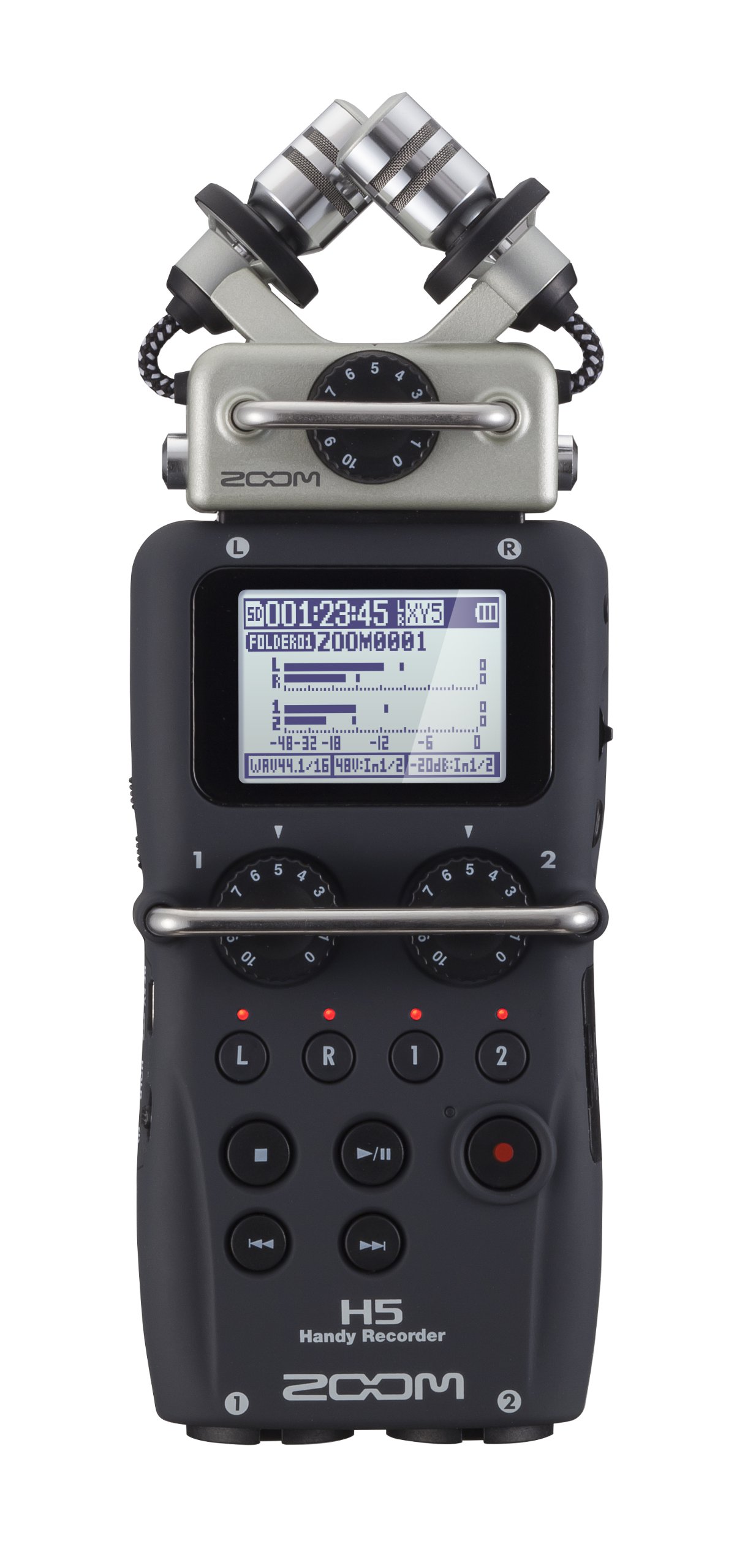
The mic is only half the chain. For overnight cabin shoots you are usually moving between dialog interiors and ambient exteriors (loon calls, distant coyotes, wind through pines) within the same hour. A two-input recorder with low-noise preamps and 32-bit float headroom dramatically reduces the number of takes lost to a sudden scream peaking your meters. Our breakdown of the best portable recorders for 2026 covers the current Sound Devices, Zoom, and Tascam options at the price points indie crews actually buy at. If your shoot involves significant outdoor capture between cabin scenes, the same workflow notes from our Zoom H6 outdoor interview guide apply directly: high-pass at 80 Hz on the recorder, blimp on at all times outside, and a dead-cat fur cover staged ready.
Treating the cabin itself
Even the best shotgun cannot fix a slap-echo problem. Before rolling on a dialog-heavy scene, walk the cabin and clap once in each room. If the slap is audible (not just a tail), you need to throw soft goods. Sleeping bags draped on parallel walls, packing blankets behind the camera, and a heavy quilt under the dolly track will get a cabin interior usable in under twenty minutes. Our short article on reducing echo in untreated rooms covers the same first-reflection principles you can adapt on location with whatever the cabin already contains.
Capturing horror-specific sounds
Beyond dialog, horror lives in atmosphere. The NTG5 is also a credible spot-effects mic for the sound design you will need in post.
Whispers and proximity breath. The capsule's low self-noise means you can boom in tight to a whispered line and still have a clean noise floor when the colorist crushes blacks. Indie horror frequently plays at −25 to −30 dBFS for whispered passages so the audience leans in; the NTG5 keeps that workable.
Wood creaks and settling sounds. Plant the mic alone in a hallway with a blimp on and a long XLR running back to the recorder. Cabins generate genuine creaks as they cool overnight. Roll twenty minutes of room tone at 1 a.m., 3 a.m., and 5 a.m. and you will capture material no foley artist can fabricate convincingly.
Distant exterior ambience. Point the mic out an open window toward the tree line and roll. The lobar pattern rejects interior HVAC while still catching wind, owls, and the occasional unsettling distant snap. Save these as named files immediately; you will use them.
What the NTG5 is not
The mic is not a magic dialog fixer for windy exteriors. In gusts above about 10 mph, even with the blimp and dead-cat, you will get low-frequency rumble that requires aggressive high-pass filtering in post. If your overnight schedule includes lakeshore or ridge scenes, plan for a lavalier (DPA 6060 or Sanken COS-11D) under wardrobe as a backup, and use the NTG5 as your atmosphere mic for those takes.
It is also not a vocal mic for ADR. Bringing actors back to a Brooklyn studio for pickup lines and matching the cabin's wooden room tone is famously difficult. Plan to capture every line clean on location, with multiple safety takes, because the NTG5's tight pattern will not be matchable from a large-diaphragm condenser in a treated booth without obvious tonal shifts.
Budget breakdown for an overnight cabin package
A realistic kit built around the NTG5 for a 5-day overnight shoot lands roughly here:
| Item | Purpose | Approx. 2026 cost (USD) |
|---|---|---|
| Rode NTG5 kit (mic, PG2-R, WS10, cable) | Primary boom and atmosphere | $499 |
| Two-input 32-bit float recorder | Dialog capture, safety headroom | $350–$900 |
| Boom pole (4–9 ft carbon) | Reach for two-shots | $180–$300 |
| Lavalier + wireless TX/RX | Windy exterior backup | $400–$900 |
| Sleeping bags, quilts, gaffer tape | On-location acoustic treatment | $0–$80 |
Total functional package: roughly $1,400 at the low end, $2,700 with name-brand wireless. For most first-feature horror productions that is the right place to spend, because location sound that needs total ADR replacement will cost more than the mic budget in post-production studio time alone.
Workflow notes from overnight horror sets
A few habits separate finished films from abandoned ones.
Slate every take with a sync clap even if you are also running timecode, because cabin power is unreliable and recorders can drift. Roll thirty seconds of room tone after every scene with the cast holding completely still; whispered scenes need matching whispered-room tone, not just quiet tone. Keep the NTG5 in its blimp between setups rather than re-rigging, since the windshield basket actually helps shed condensation and protects the capsule from cast members brushing past in narrow hallways. Log every wild track and ambience clip with a one-line description into a paper notebook, because trusting your post-production memory three months later is how scenes lose their soundscape.
Frequently Asked Questions
Is the Rode NTG5 quiet enough for whispered horror dialog?
Yes. At 10 dBA self-noise it is among the quietest shotgun mics under $600, which means whispered lines recorded at 18–30 inches from the actor will sit cleanly above the noise floor without aggressive denoising in post. If you need to boom further away because of camera framing, consider supplementing with a hidden lavalier rather than turning up the preamp gain.
Can I use the NTG5 outside the cabin for night exteriors?
Yes, but with the supplied blimp and a fur windjammer. Above roughly 10 mph the mic still captures wind rumble that needs a high-pass filter at 80–120 Hz on the recorder. For sustained outdoor work in real weather, an indoor-friendly shotgun like the NTG5 is workable but not ideal; many productions pair it with a dedicated exterior shotgun and use the NTG5 as the interior unit.
What recorder pairs best with the NTG5 for a two-person sound team?
Any modern 32-bit float two- or four-track recorder works. Sound Devices MixPre-3 II, Zoom F3, and Tascam Portacapture units all run the NTG5 cleanly on phantom power and give you the safety net to capture an unexpected scream without distortion. Our 2026 portable recorder roundup compares them at typical indie price points.
Will overnight humidity in a forest cabin damage the NTG5?
The mic is engineered for the temperature range typical of overnight forest shoots, and the RF-bias capsule design tolerates humidity better than externally biased condensers. The practical risks are condensation when moving between warm interior and cold exterior, and dew settling on the basket. Mitigate both by leaving the blimp on, storing the mic in a sealed case with silica gel between days, and letting it acclimate for fifteen minutes before powering up after a temperature change.
How does the NTG5 compare to the older NTG3 for indie horror?
The NTG5 is shorter, lighter, and has a flatter off-axis response, which matters more in tight wooden interiors than in open exteriors. The NTG3 has slightly warmer on-axis tonality that some operators prefer for masculine dialog. For overnight cabin horror specifically, the NTG5's shorter form factor (fewer boom-bumping moments in narrow hallways) and superior interior off-axis response make it the more practical pick.
Do I need a separate hypercardioid for cabin interiors?
Most indie productions do not. A dedicated hypercardioid (Schoeps CMIT, Sennheiser MKH 50) sounds gorgeous on dialog in reverberant rooms, but those mics cost $1,500–$2,500 and the NTG5 covers 90% of the use cases for a first feature. If your script has more interior dialog than exterior, and budget is tight, put the savings into a second NTG5 for ambience and a better wireless lav set instead.
What is the single biggest mistake indie horror crews make with this mic?
Booming too far away. New operators leave 4–6 feet between the capsule and the actor because they are afraid of dipping into frame. The NTG5 rewards proximity: get to 18–24 inches above the talent, watch the frame line carefully with the DP, and your dialog tracks will be dramatically more usable. Wide-shot dialog at long mic distance is what drives expensive ADR sessions later.
For full transparency on how this guide is funded, see our affiliate disclosure. Real overnight horror sound is a craft; the gear only earns its place if the operator knows the room. Block your shots with the mic in mind, treat the cabin before you roll, and the NTG5 will give you a track most audiences will assume came from a much larger production.
Key Takeaways
- Choosing the right Rode NTG5 for indie horror cabin shoots means matching capacity and output ports to your actual devices
- Always check actual watt-hours (Wh), not just watts — runtime depends on Wh, not peak output
- Also covers: NTG5 overnight forest filming
- Also covers: Rode NTG5 boom mic horror
- Also covers: indie horror short film microphone
- Compare price-per-Wh across models to find the best value for your budget