The Sennheiser MKH 416 for documentary narration at home is the natural choice when you are voicing a history series from a converted attic. The 416 is a short shotgun condenser designed for film and broadcast, and its tight supercardioid/lobar pattern rejects the slanted-roof reflections and HVAC rumble that plague attic spaces. For a narrator reading 30-minute episodes about WWII supply chains or Roman aqueducts, the 416 delivers the warm, intimate, slightly larger-than-life midrange that listeners associate with prestige documentaries on Netflix, HBO, and the BBC. This guide explains why the mic fits attic narration, how to treat the room, and which signal chain and technique choices keep your tracks broadcast-ready.
Why the MKH 416 Suits Attic-Based History Narrators
Attics are unusual recording spaces. They combine small floor footprints with steep angled ceilings, often exposed rafters, and frequently a mix of drywall, fiberglass batting, and bare wood. A large-diaphragm condenser like a U87 or TLM 103 hears that whole geometry: the slap from the sloped wall, the flutter between the kneewalls, the ductwork rumble. The MKH 416, by contrast, narrows its acceptance lobe to roughly a 90-degree cone in front of the capsule and dramatically attenuates sound arriving from the sides and rear. For an attic narrator that means the angled ceiling six inches above your head becomes acoustically far less present in the recording.
The MKH 416 also uses Sennheiser's RF condenser topology, which is famous for being unbothered by humidity. Attics swing 20–30°F between summer and winter and trap moisture under the roof deck. Traditional DC-bias condensers can develop crackle, self-noise spikes, or capsule arcing in those conditions. The 416 was engineered for jungle shoots, Arctic location work, and rain-soaked exteriors, so the unconditioned environment under your roof is well within its design envelope. If you are evaluating Sennheiser MKH 416 for documentary narration at home, the climate resilience alone justifies serious consideration.
What History-Doc Narration Demands From a Microphone
Historical documentary VO is a specific genre. It is rarely shouted, never whispered, and the pacing is deliberate. Producers want a voice that sounds authoritative and slightly distant in time — not the close, breathy intimacy of a true-crime host, and not the bright clarity of a tech podcast. The MKH 416 delivers this in three ways:
- Presence peak around 5–8 kHz. The 416 has a gentle lift in the upper-mids that adds articulation to consonants without making sibilants harsh. Narrators reading dense factual scripts benefit because the t/k/s sounds stay legible at low listening volumes.
- Controlled proximity effect. Worked at 6–8 inches, the 416 thickens the lower register just enough to suggest gravitas without muddiness.
- Off-axis coloration that flatters voice. Many shotguns sound nasal or honky off-axis, but the 416's interference tube is tuned so that small head movements do not throw timbre into chaos.
Treating an Attic for the MKH 416
The 416 rejects a lot, but it cannot perform miracles. Reflections that arrive on-axis — from a music stand, a script, a laptop screen, or the wall directly in front of you — will still be captured. The good news is that attic geometry actually helps you here. The sloped ceiling behind the mic deflects rear reflections away from the capsule rather than back at it. The trick is to angle yourself so that the steepest part of the roofline is behind the microphone, with the mic pointing slightly upward into the lobar null of the back wall.
Start with a heavy moving blanket draped behind your script position, a portable vocal booth or rolled fiberglass behind the mic, and a thick rug underfoot. Avoid foam squares stapled to the rafters — they handle highs but ignore the boomy low-mids that attic wood produces. If you want a deeper dive into killing reflections without overbuilding, our guide to reducing echo in home studios walks through cheap, reversible treatment that works for renters and homeowners alike.
Preamp and Interface Choices
The MKH 416's sensitivity is around -32 dBV/Pa, which is healthy for a shotgun but still requires a clean preamp with at least 60 dB of low-noise gain for quiet narration. Cheap bus-powered interfaces will hiss audibly when you ride a soft passage. Recommended preamp/interface tiers for attic narrators:
- Entry: Focusrite Scarlett 2i2 4th gen with the Auto Gain button disabled — adequate at 56 dB but noticeably noisier on whisper takes.
- Sweet spot: Universal Audio Volt 276, RME Babyface Pro FS, or MOTU M2. The RME in particular pairs beautifully with the 416 because the preamps are quiet and the conversion is transparent.
- Inline boost: A Cloudlifter CL-1 or sE DM1 between the mic and a budget interface adds ~25 dB of clean gain and is the single best investment for narrators using lower-end preamps.
If you are still shopping the interface side of your chain, see our roundup of the best audio interfaces for 2026 for a current comparison across price tiers.
Mic Technique for Long-Form History Narration
Working distance matters more with a shotgun than a large-diaphragm condenser. The 416 is happiest at 6 to 10 inches from your mouth, angled at roughly 15 degrees off-axis to soften plosives without losing the presence peak. A 416 placed directly in front of your lips will pop on every B and P, and a pop filter alone often is not enough — angle the capsule, do not just shield it.
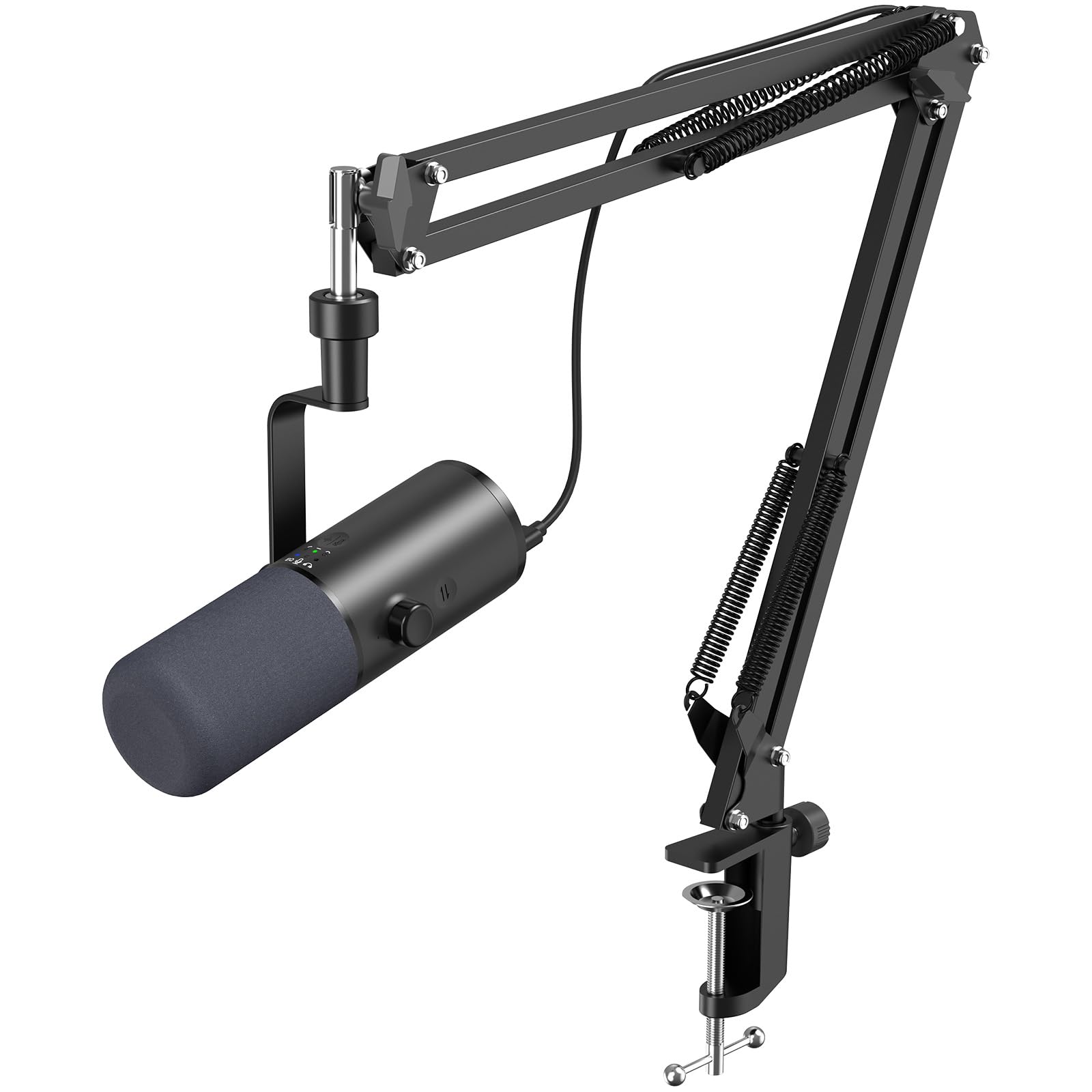
Mount the mic in a Rycote InVision shock or a Sennheiser MZS 20 to isolate it from the attic floor. Footsteps, neighbors below, and even the script binder hitting the desk will transmit through a rigid clamp. Suspend the mic from a boom arm clamped to a sturdy desk rather than a floor stand if your attic floor is springy joist-on-rafter construction.
Dealing With the Particular Sins of Attic Recording
Three attic problems undermine narration sessions more than any other: HVAC, traffic, and weather. The 416 helps with the first because ductwork rumble tends to arrive from below or behind the capsule, which the supercardioid pattern attenuates. Traffic and aircraft noise are harder — they enter through roof vents and gable windows from above, which is exactly where the lobar pattern is most sensitive on a vertically aimed mic. Two workarounds: aim the mic horizontally rather than down, and record during noise-quiet windows (early morning before commute, late evening after flight curfews).
Rain on a roof is unfixable. Build your production schedule around weather forecasts. Hard insulation under the roof deck (mineral wool R-30 or higher) attenuates rain by roughly 8–12 dB at podcast-relevant frequencies. If your attic is unfinished and you plan to narrate professionally long-term, the insulation upgrade pays for itself in re-record time saved. Our soundproofing guide covers the cheap-to-extreme options.
Sample Recording Chain
A reliable starter chain for the Sennheiser MKH 416 for documentary narration at home looks like this:
- MKH 416 in a Rycote InVision shock with a metal mesh pop filter angled 15° off-axis
- Mogami Gold XLR (3 ft is plenty — no need for studio-length cable runs)
- RME Babyface Pro FS at 48 kHz / 24-bit, gain at ~52 dB
- Logic Pro, Reaper, or Pro Tools recording dry with no input plugins
- Post-processing: high-pass at 80 Hz, gentle de-esser, broadband noise reduction only if needed, then -16 LUFS integrated loudness for episodic streaming
When the MKH 416 Is the Wrong Choice
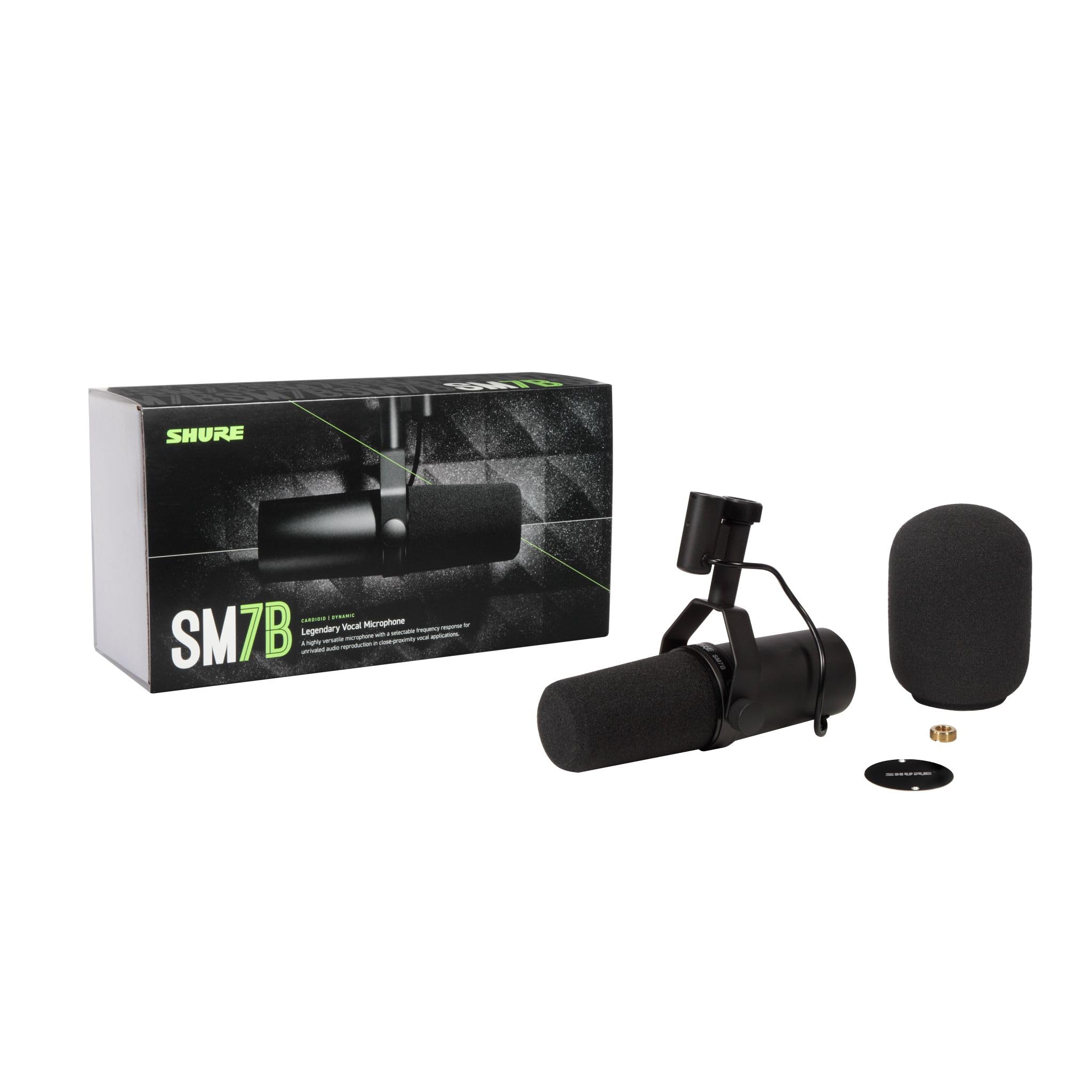
If your attic is essentially untreated — bare drywall, hardwood floor, vaulted ceiling — a shotgun will still capture the room character through its on-axis lobe. In that scenario a dynamic mic like a Shure SM7B or Electro-Voice RE320 may produce a usable track faster because dynamics are inherently less sensitive to room reverb. Compare options in our 2026 podcast microphone roundup to see how the 416 stacks up against more forgiving options.
The 416 is also the wrong tool if multiple narrators record simultaneously at the same desk. The narrow pattern means each voice needs its own 416, and that gets expensive fast. For multi-host setups, large-diaphragm condensers or broadcast dynamics on individual booms work better.
Editing for the Documentary Sound
Even with a perfect 416 capture, history-documentary narration is a finished sound — not a raw one. The hallmark processing chain in post is conservative: a gentle bell EQ pulling 2 dB around 250 Hz to remove attic boxiness, a 2:1 compressor with slow attack catching only the loudest peaks, a touch of plate or hall reverb at -28 dB to suggest a slightly larger space than your attic actually is, and final limiting to broadcast loudness. Avoid heavy de-essing — the 416 already controls sibilance, and over-processing introduces lisp artifacts that listeners notice on headphones.
Frequently Asked Questions
Is the Sennheiser MKH 416 overkill for a hobbyist podcast narrator?
If your podcast is a passion project read once a week from a closet, yes — a Shure SM7B or Rode PodMic delivers 90% of the result for a third of the price. The 416 makes sense when you are competing for paid documentary VO work, when your room has irregular geometry like an attic, or when your script style demands cinematic authority that dynamics struggle to convey.
Can I use the MKH 416 for both narration and on-camera interview recording?
Yes — that is exactly the use case it was designed for. The 416 has been the standard ENG and documentary boom mic for 40 years. The same mic that narrates your history episodes in the attic can boom interviews on location with no compromise.
Do I need an MKH 416 or is the MKH 8060 better for home use?
The 8060 is shorter, lighter, and slightly more neutral than the 416. For a stationary attic narration setup, the 416 is the safer pick because its midrange presence flatters voice without EQ. The 8060 shines for music recording and when you need to hide the mic on camera — less relevant for audio-only documentary work.
How much acoustic treatment does an attic actually need for the MKH 416?
Less than you would need for a large-diaphragm condenser, but more than zero. Plan for first-reflection absorption in front of and behind the mic position, broadband bass trapping in at least two corners, and a soft floor. A reasonable budget is $300–$600 in rockwool, fabric, and frames — see our tips for improving home studio audio quality for a step-by-step approach.
What is the best interface for the MKH 416 under $500?
The RME Babyface Pro FS if you can stretch the budget, the MOTU M2 if you cannot. Both have preamps quiet enough that the 416's own self-noise (13 dB-A) becomes the dominant noise floor, which is what you want.
Does the MKH 416 need phantom power?
Yes, +48V phantom is required. Any modern audio interface supplies this. The 416 draws only 2 mA so it will not overload USB bus-powered interfaces, but for the cleanest performance use an interface with a dedicated power supply.
Can I record narration directly into a portable recorder instead of a computer?
Absolutely. The Zoom F3, Sound Devices MixPre-3 II, and Zoom H6 all provide quiet phantom-powered preamps that pair well with the 416. This is a popular setup for narrators who travel between locations or want to isolate their recording chain from a noisy computer. Compare options in our 2026 portable recorder guide.
How long will an MKH 416 last in a hot, humid attic?
Decades. The MKH series is built like a tank and the RF capsule is genuinely immune to humidity-induced failures that plague electret condensers. Working units from the 1980s still meet original spec. The 416 is one of the few pieces of audio gear you will likely sell working when you upgrade rather than discard.
Key Takeaways
- Choosing the right Sennheiser MKH 416 for documentary narration at home means matching capacity and output ports to your actual devices
- Always check actual watt-hours (Wh), not just watts — runtime depends on Wh, not peak output
- Also covers: MKH 416 home attic voiceover
- Also covers: shotgun mic for documentary narrator
- Also covers: Sennheiser 416 untreated attic
- Compare price-per-Wh across models to find the best value for your budget