If your worship team handles a Sunday service, records the sermon for a weekly podcast, and pushes audio to a livestream all from one back-row table, the Yamaha MG10XU for small church sermon livestream duty is a sensible center of the rig. The MG10XU gives you four mono mic preamps with phantom power, two stereo inputs for music playback, built-in SPX effects for a touch of reverb on the pastor's voice, and a class-compliant USB audio interface that sends a stereo mix to your laptop for OBS, ProPresenter, or Audacity. For a volunteer-run room with two lavaliers, a pulpit mic, a worship leader vocal, and a backing track, that I/O count maps almost one-to-one with what a small church actually needs each week.
This guide is written for the deacon, AV volunteer, or part-time tech director who has been asked to "just get the sermon online" without a five-figure budget. We'll walk through why the MG10XU keeps showing up in small-church setups, what trade-offs come with that choice, how to wire it for simultaneous front-of-house, livestream, and podcast capture, and the most common mistakes that turn a clean board into a hum-and-feedback nightmare.
The best Yamaha MG10XU for small church sermon livestream for your situation depends on how you plan to use it and where.
Why a 10-channel analog mixer still makes sense for small churches in 2026
Digital mixers and all-in-one podcast consoles get a lot of attention, but a sanctuary of 50-150 seats running a weekly sermon podcast has a different set of constraints than a content creator. The volunteers rotate. The pastor wants one knob labeled "my mic louder." The laptop in the booth is shared between slides, livestream, and recording. And the budget after the building fund is usually under $300 for the console itself.
The MG10XU answers those constraints with physical, labeled knobs, no menus, no firmware updates the week before Easter, and a single USB cable that handles both playback (intro music, hymn tracks) and capture (the stereo mix going to the podcast). Anyone who has touched a mixer before can sit down and run it. That matters more than spec-sheet bragging rights when your Sunday morning operator is a 17-year-old who learned it last week.

Inputs you'll actually use on a Sunday morning
A typical small-church input list looks like this: pulpit condenser or gooseneck (channel 1), pastor's wireless lavalier receiver (channel 2), worship leader handheld vocal (channel 3), second vocalist or acoustic guitar DI (channel 4), and a stereo feed from a keyboard or backing-track laptop (channels 5/6 or 7/8). That uses every mono channel and one stereo pair, leaving the other stereo pair for a Bluetooth or 3.5mm playback for pre-service music. Phantom power is global on the MG10XU, so plan to keep all condensers on one half of the board if you also run a dynamic that doesn't like 48V on its cable.
The 1-knob compressors on channels 1-4
Yamaha's single-knob compressors on the first four channels are the most underrated feature for sermon work. A pastor who steps closer to the lectern during the closing prayer and then leans back for the benediction is the textbook reason compression exists. Set the knob between 9 and 11 o'clock on the pulpit mic and the lavalier, and the gain swings that used to drive your livestream meters into the red will sit politely under the threshold. It is not a studio-grade comp, but for a room where nobody is going to ride a fader for 35 minutes, it is the difference between a listenable podcast and one your members skip.
Routing for three outputs at once: house, stream, and podcast
Here is where small-church teams get tripped up. You need sound in the room, a feed to the livestream encoder, and a recorded file for the podcast. The MG10XU's ST OUT goes to your powered speakers or amplifier for the room. The USB output sends the same stereo mix to the computer, where OBS grabs it as the audio source for the stream and a second app (Audacity, Reaper, or even QuickTime) records it to disk for the podcast edit. The C-R/PHONES section feeds the booth headphones so your operator hears exactly what is going out, not what is bouncing off the back wall.
One wrinkle: the USB return from the computer also lands on the stereo bus by default, which means if you are not careful, the livestream's own audio loops back into itself. Pull the 2TR/USB to ST switch out when you are streaming, and only push it in when you want to play a pre-recorded video clip through the house. Write that on a piece of gaffer tape next to the switch. Your future Sunday-morning self will thank you.
Sample-rate and laptop settings that prevent dropouts
Set the MG10XU to 48 kHz, 24-bit in your laptop's audio settings to match video standards. Streaming platforms expect 48 kHz, and if your DAW is at 44.1, you get pitch and drift issues over a 40-minute sermon. Close every background app you do not need - the Zoom updater, Dropbox sync, browser tabs with autoplay video - because USB audio shares the bus with everything else. A volunteer's laptop with 16 Chrome tabs open is the single most common cause of "the podcast sounds glitchy this week" complaints.
Where the MG10XU falls short, and when to step up
Honesty matters when you are spending the church's money. The MG10XU is a stereo-out interface, which means the laptop sees one stereo pair, not individual channels. If your podcast editor wants to fix the pastor's mic separately from the worship leader's vocal in post, the MG10XU cannot give you that. You get the mix the operator made on Sunday, full stop. For a sermon-focused podcast where the talk is 95% of the content, that is usually fine. For a service where you want to remix the music for a YouTube release later, you will outgrow it.
The other ceiling is mic count. Four mono preamps plus stereo line inputs covers small teams but breaks down at five or more vocal mics, a drum kit, and a full band. At that point look at the MG12XU, MG16XU, or a digital console with multitrack USB. Our roundup of the best podcast mixers for seamless recording in 2026 covers options at the next tier up, including multi-track USB boards that send each channel to the DAW as a separate track.
Treating the room before you treat the signal
No mixer fixes a reverberant sanctuary. If your sermon recordings sound distant and washy, the problem is almost certainly the room, not the board. Hard pews, plaster walls, and a tall ceiling create reflections that the lavalier picks up at the same level as the pastor's direct voice. A close-mic discipline (lavalier within six inches of the mouth, gooseneck on the pulpit angled toward the lips) does more for podcast clarity than any EQ move. For volunteer-run rooms that double as recording spaces, our guide to reducing echo applies almost directly - the same physics that hurt a bedroom voiceover hurt a sermon mic in a 100-seat sanctuary.
A typical small-church signal chain with the MG10XU
Walk it in order from the pastor's mouth to the published RSS feed:
1. Pastor speaks into a wireless lavalier. The receiver sits in the booth and feeds its XLR output into channel 2 of the MG10XU. 2. The pulpit condenser runs XLR to channel 1, with phantom power on. 3. The worship team takes channels 3 and 4, with the keyboard's stereo output coming into the 5/6 pair. 4. The operator sets gain with the PFL button held, watches the level meter peak around -12 dBFS on transients, and sets the channel comp knob to about 10 o'clock. 5. The ST OUT (or GROUP if you use it) runs balanced TRS to the house amp. 6. USB goes to the booth laptop. 7. OBS grabs the USB audio device and pairs it with the camera for the livestream to YouTube or Facebook. 8. A second app records the same USB input to a WAV file on the desktop. 9. Monday morning, the volunteer editor opens the WAV in Audacity or Reaper, trims the head and tail, applies a noise-reduction pass and a light limiter, exports an MP3 at 96 kbps mono, and uploads to the podcast host. 10. The RSS feed publishes to Apple Podcasts, Spotify, and the church website by Tuesday.
That whole chain runs on a sub-$300 mixer, a $400 laptop, a $30 USB cable, and free software. The single largest quality jump available to most small churches is not more expensive gear - it is a Monday editor who knows how to apply a noise gate and an EQ high-pass at 100 Hz. For the volunteer team behind that desk, our essential podcasting equipment guide covers headphones, monitors, and accessories worth budgeting alongside the mixer.
Backups and redundancy on a volunteer budget
One overlooked habit: also run a cheap handheld recorder (a Zoom H1n or H4n) plugged into the C-R OUT or a spare aux send. If the laptop crashes mid-sermon - and it will, eventually - you still have a complete audio file for the podcast. The livestream might fail, but the members who listen Monday during their commute will never know. Treat the handheld as the safety, not the primary, and check the SD card every month.
Frequently Asked Questions
Can the Yamaha MG10XU record each mic as a separate track for podcast editing?
No. The MG10XU's USB output is a stereo mix only - whatever the operator sent to the main bus is what your DAW receives, as a single L/R pair. If your podcast workflow needs per-mic tracks for separate processing on the pastor, the lavalier, and the music, you need a multi-track USB mixer or interface. For a sermon-only podcast where the talk is the focus, the stereo mix is almost always sufficient and dramatically simpler for volunteers to manage.
Does the MG10XU work with OBS for a YouTube church livestream?
Yes, and it is one of the most common pairings in small-church AV rooms. The MG10XU shows up as a class-compliant USB audio device on Windows and macOS with no driver install needed. In OBS, set the audio input source to "USB Audio CODEC" (or whatever name your OS assigns), set the sample rate to 48 kHz to match video, and disable any other audio sources to prevent double-routing. The same USB stream can simultaneously feed your podcast recording app.
How do I avoid feedback when the same mic goes to the room speakers and the livestream?
Feedback happens when the mic hears its own amplified signal from a speaker and re-amplifies it. The fix is physical first, electronic second: place house speakers in front of the mics (not behind), keep lavalier and pulpit mics at least three feet from any monitor wedge, and ring out the room before service by slowly raising the gain until you hear the first hint of ringing, then back off 6 dB. Use the MG10XU's per-channel high-pass filter on all voice mics to roll off low rumble that often triggers feedback.
Do we need a separate audio interface if we already have the MG10XU?
No. The MG10XU is the audio interface. The built-in USB I/O replaces a Focusrite Scarlett or Behringer UMC for this use case. Save the budget for better mics or room treatment instead. The exception is if you outgrow the stereo limitation and need multi-track capture, at which point you would replace the MG10XU rather than supplement it.
What microphones pair best with the MG10XU for sermon recording?
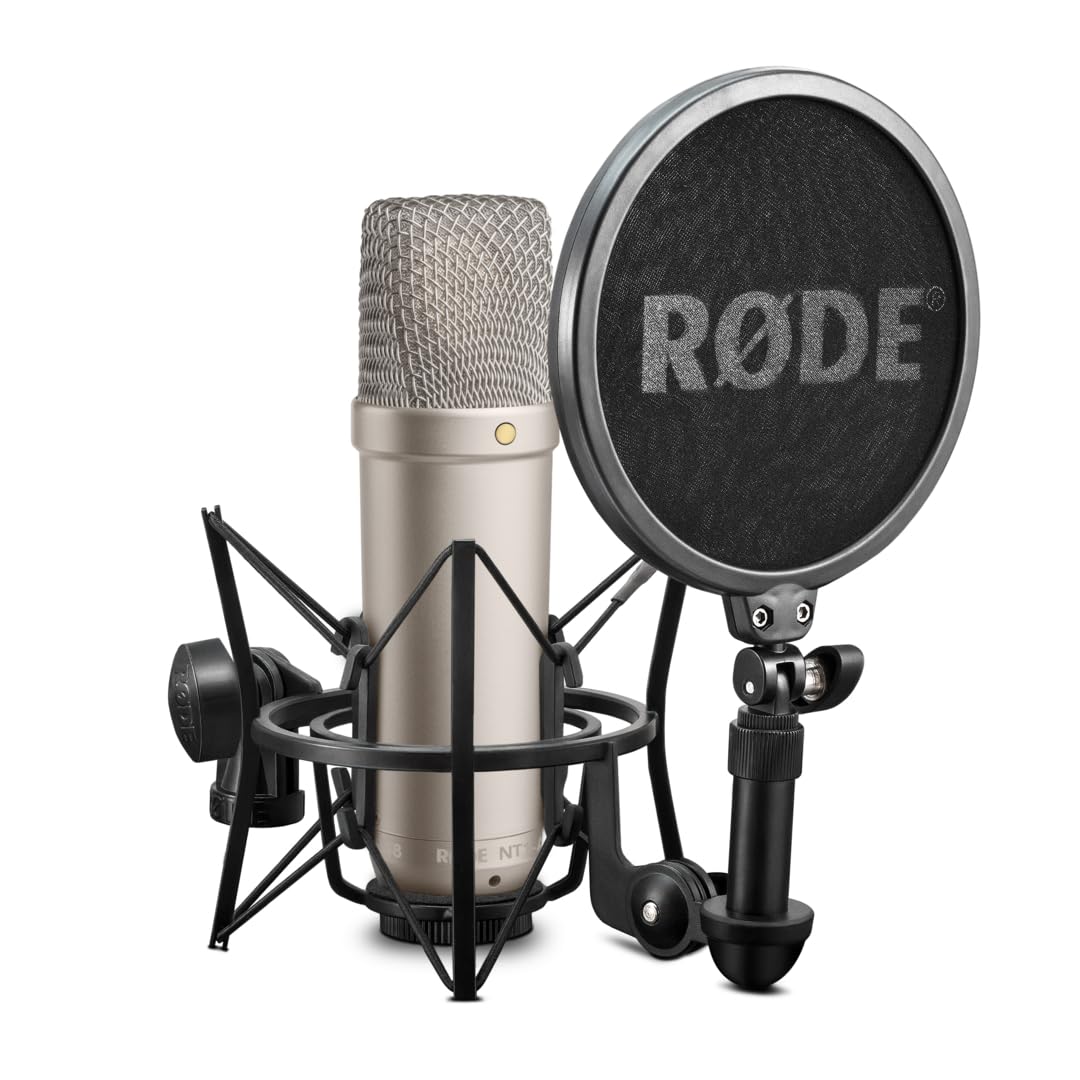
For the pulpit, a cardioid condenser gooseneck (Shure MX415 or similar) gives consistent pickup with the pastor at a fixed position. For mobile pastors, a wireless lavalier system in the $300-$500 range (Shure BLX or Sennheiser EW-D) plugs into the MG10XU via XLR with phantom power on. For worship vocals, dynamic handhelds (Shure SM58 or equivalent) handle hot vocals without feedback issues. Avoid USB mics entirely - they bypass the mixer and complicate routing.
How do we get the recorded sermon sounding less echoey in post?
The honest answer is that you cannot fully remove reverb once it is recorded - it is baked into the file. You can reduce it with iZotope RX's De-reverb module or Adobe's Enhance Speech feature, both of which use AI to separate direct voice from room reflections. The better fix is preventing it at the source: get the mic closer to the speaker's mouth, use cardioid patterns, and address the worst reflective surfaces in the room. Our guide to improving audio quality covers techniques that translate directly from home studios to small sanctuaries.
Is the MG10XU's built-in reverb worth using on the sermon podcast?
For the podcast itself, no - leave the SPX effects off the voice channels going to the recording. A small amount of plate or hall reverb on a worship vocal during the service can sound great in the room but creates a muddy, dated podcast file. Route effects to the house mix via the aux send if you want them live, but keep the USB recording dry so your Monday editor has a clean signal to work with. You can always add subtle processing in post; you cannot remove baked-in reverb.
Key Takeaways
- Choosing the right Yamaha MG10XU for small church sermon livestream means matching capacity and output ports to your actual devices
- Always check actual watt-hours (Wh), not just watts — runtime depends on Wh, not peak output
- Also covers: MG10XU church livestream mixer
- Also covers: Yamaha MG10XU sermon podcast
- Also covers: small church audio mixer
- Compare price-per-Wh across models to find the best value for your budget