The Zoom F3 for nature podcasters bird dawn chorus recording is arguably the single most consequential gear shift in the last decade of field-based audio storytelling. Its 32-bit float capture removes the gain-staging panic that has historically tortured dawn chorus sessions, where a distant chiffchaff can sit thirty feet up one second and a robin can scream into the capsule from a low branch the next. With dual AD converters covering an effective 135 dB of usable dynamic range, you do not clip on the close-call and you do not bury the far-off cuckoo. That single fact reshapes how nature podcasters plan, deploy, and edit the most musically dense ninety minutes of any natural day.
This guide is written for podcasters who already own decent gear but keep losing dawn chorus material to a brutal trio of problems: peaks that distort when a wren explodes overhead, noise floors that hiss when you set gain conservatively, and the simple fact that nobody wants to crouch over a recorder at 04:12 adjusting a trim knob with cold fingers. We will walk through why the Zoom F3 is the rare piece of kit that genuinely solves the problem rather than rebranding it, what microphones pair sensibly with it for bird work, the field-reliability edge cases you must plan for, and how to translate the resulting files into a publishable narrative episode without drowning in 32-bit float wave files.
The best zoom f3 for nature podcasters bird dawn chorus for your situation depends on how you plan to use it and where.
Why 32-bit float actually matters at dawn
The dawn chorus is not loud in the way a concert is loud. It is loud in the way a thunderstorm is loud: short, sharp, unpredictable peaks layered over a quiet but information-rich bed. A song thrush at two metres can hit 95 dB SPL at the capsule. A goldcrest in a spruce thirty metres away might sit at 35 dB SPL. The traditional answer, riding gain manually or using a limiter, is incompatible with leaving a recorder unattended in a hide while you narrate from a respectful distance. Set gain too high and the close birds clip. Set gain too low and the editing floor turns to mush when you push the quiet calls up in post.

32-bit float bypasses the trade-off. The F3 records two simultaneous AD conversions at different gain stages and merges them into a single floating-point file. In practice this means you can normalize an apparently silent file in your DAW and hear a wood warbler that was 50 dB below your monitoring level, or pull down a peak that looked like a brick wall and recover a clean transient. For dawn chorus work specifically, this is the difference between a usable bed and a wasted morning.
Form factor: why size matters before sunrise
The Zoom F3 is roughly the footprint of a deck of cards and runs on two AA batteries. That sounds like a spec sheet detail until you have actually crawled into a reedbed at 03:45 with a coat full of gear. The F3 fits in a chest pocket. It can be hung from a branch in a small dry bag. It can sit inside a Rycote softie windshield with a stereo mic pair and disappear from view in a hedge. Larger recorders force you to commit to a tripod, which is fine for a deliberate listening point but a real liability when you want three or four passive drops spread across a clearing to capture spatial movement between species.
The two XLR/TRS combo inputs accept condensers with phantom power, so the F3 is not just a stereo handy-recorder substitute. It is a proper professional preamp in a tiny shell. The preamps themselves are exceptionally quiet, with an EIN around -127 dBu, which matters enormously when you are recording sub-40-dB-SPL ambience at distance with a high-sensitivity small-diaphragm capsule.
Microphone pairing for the dawn chorus
The F3 is the chassis. The microphone choice is what your audience will actually hear. Three approaches dominate among working nature podcasters.
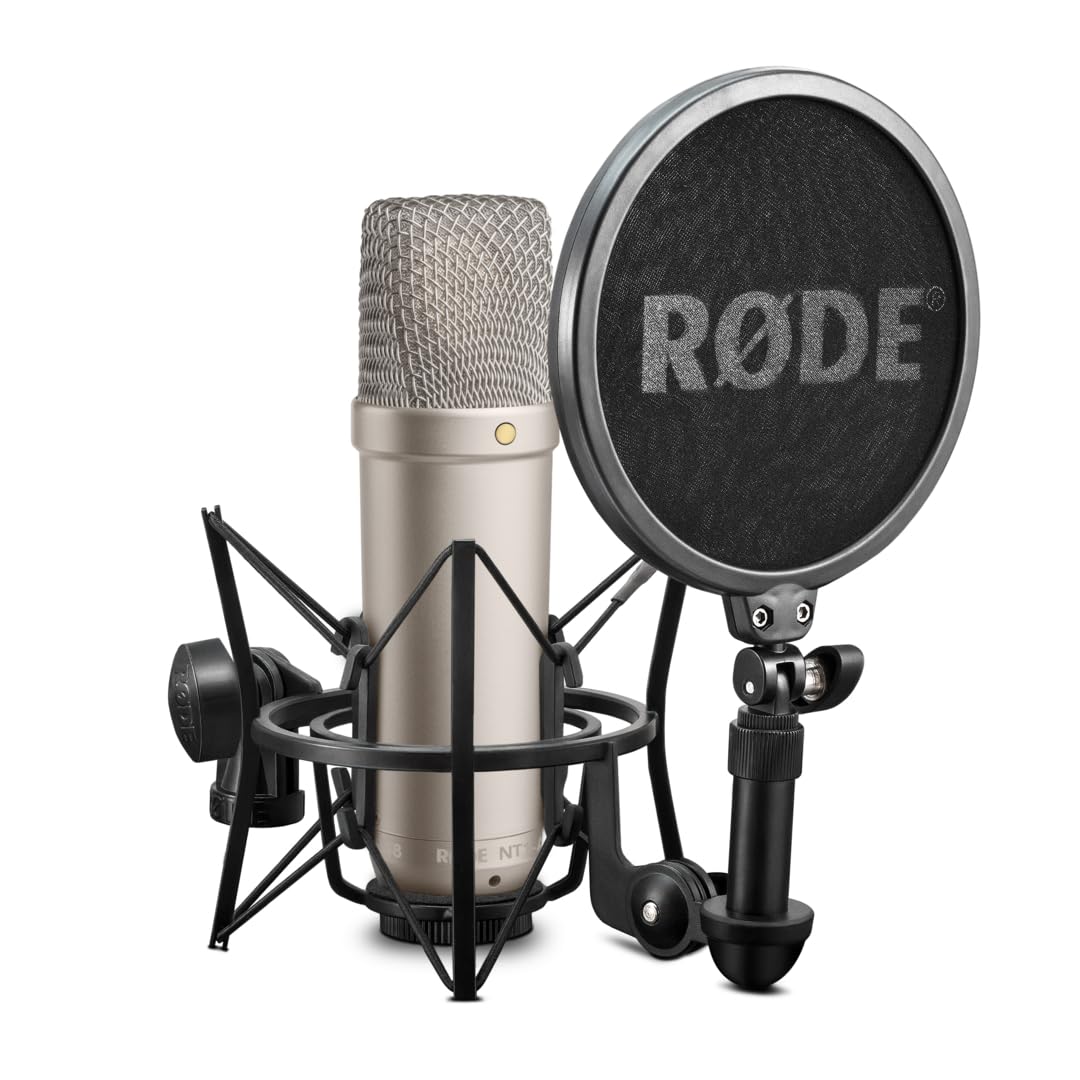
A spaced pair of omnidirectional small-diaphragm condensers (Clippy EM272 capsules in a custom mount, or a matched LOM Usi pair) gives an immersive, almost binaural sense of the chorus surrounding the listener. This is the default for narrative episodes where the soundscape is the protagonist. Pair with the F3's quiet preamps and you have a recording chain that disappears.
An ORTF stereo pair (two cardioid SDCs spaced 17 cm apart at 110 degrees) gives more directional focus, useful when you want to point at a specific singing perch or capture a duet between two males without ambient sprawl. The F3 handles the phantom power load without complaint, and the small form factor means the recorder can sit directly under the bar without unbalancing it.
A single shotgun (Sennheiser MKH 416 or 8060) into one F3 channel is the answer when you want to isolate a single bird for a species ID segment. The second channel can carry a lavaliered ambient mic for context. The F3 handles dual-source recording cleanly because each channel has its own dual ADC pair, so you can record a loud close shotgun and a quiet ambient on the same card without compromise.
Power, storage, and dawn reliability
The F3 runs about 5.5 hours on two lithium AAs in 32-bit float at 48 kHz, which comfortably covers a chorus session. Use lithium AAs (not alkaline) below freezing. Carry a spare set in an inside pocket against your body heat, because cold batteries lose voltage fast and the F3, like any 32-bit float recorder, writes large files (around 17 MB per minute stereo). A 64 GB microSD card holds roughly 60 hours of stereo 32-bit float at 48 kHz, but I recommend two 128 GB cards and swapping after each session for an offsite-style redundancy habit.
The recorder has no built-in speaker and a tiny screen, which is fine in pre-dawn dark but unhelpful if you need to scrub through something. Bring a small set of closed-back headphones for capsule placement and level monitoring (you still want to monitor for wind, handling noise, distant traffic), even though 32-bit float means you do not need to obsess over the meters.
Wind, dew, and what 32-bit float will not save you from
32-bit float fixes the dynamic range problem. It does not fix wind noise, capsule moisture, or rustling foliage against a windshield. Dawn is often calm but not always, and dew on a fluffy windshield can mute high frequencies for an hour while it dries out. Carry a spare windshield in a dry bag. Use a high-pass filter only in post (never in record) because once filtered, the low end is gone, and 32-bit float cannot recover it. Similarly, the F3 has no XY built-in mic, so a quick handheld grab for narration requires either a connected microphone or a separate recorder. For walk-and-talk pieces it is not the right tool.
Workflow: turning 32-bit float into a publishable episode
The single biggest workflow mistake new F3 users make is treating 32-bit float files like 24-bit files in their DAW. Drop a 32-bit float wave into Reaper or Pro Tools and it can look almost silent or apparently clipped depending on what gain was applied at capture. Normalize to -3 dBFS peak first, then audition. Do all editing in 32-bit float and only render to 24-bit (or 16-bit for distribution) at the final stage. This preserves headroom right through to mastering.
For a typical nature podcast episode, expect to record 90-180 minutes of chorus, log the standout cuts during a coffee-fueled listen back the same morning, and pull 4-8 short beds of 60-90 seconds each for use under narration. Loudness target -16 LUFS integrated for the final mix is friendly to both headphones and car speakers, with true peak below -2 dBTP for streaming platform safety.
Who should not buy the F3
If your podcast is primarily interview-driven with occasional outdoor segments, the F3 is overkill and underspecified at the same time. You would be better served by a recorder with built-in mics for grab moments. See our roundup of the best portable recorders for podcasters in 2026 for hybrid-use options, and our comparison piece on the Zoom H6 for outdoor field interviews with wind noise if you need on-board mics plus four-channel XLR capacity. The F3 is for podcasters who already own external microphones and want a recorder that will not bottleneck them.
Likewise, if you want timecode sync with video, in-recorder slate tones, or four-channel ambisonic capture, the F3's two-channel design is a hard ceiling. Step up to the Zoom F6 or F8n Pro for those workflows.
Setting up a typical dawn chorus session
Scout the location the previous afternoon. Identify two or three singing perches, prevailing wind direction, and access paths that will not crackle underfoot in the dark. Arrive ninety minutes before civil twilight. Deploy the F3 with your chosen mic configuration on a low tripod or hung from a branch with shock absorption. Hit record, walk back at least fifteen metres along your scouted path, and let the recorder run continuously. Do not check it. Do not adjust gain. The 32-bit float file will contain everything you need.
While the F3 runs unattended, you can deploy a second drop further away, or sit with a directional rig for species ID inserts. The unattended primary record is your bed; the directional rig is your editorial content. This two-track approach is the standard professional method and it is only practical because the F3 is small enough and reliable enough to abandon.
For broader equipment context covering microphones, monitoring, and post-production gear for nature and field-based podcasts, see our essential podcasting equipment guide. If you want a wider comparison of the recorder landscape for nature-focused work, the best portable recorders 2026 roundup covers handheld, multitrack, and 32-bit float models side by side.
Frequently Asked Questions
Is the Zoom F3 good for recording the dawn chorus in stereo?
Yes, with the right microphones. The F3 has two XLR/TRS combo inputs and excellent quiet preamps, so a spaced omni pair or an ORTF pair feeds it cleanly. The 32-bit float capture means you do not need to set gain perfectly, which is the historical pain point for unattended dawn recordings where peaks are unpredictable.
Can I leave the Zoom F3 unattended in a hide overnight to capture the start of the dawn chorus?
Battery life is the limit: roughly 5.5 hours on two lithium AAs at 48 kHz 32-bit float. If you start the recorder at 02:30, you will capture through to about 08:00, which covers the full chorus. For longer deployments, use an external USB power bank with a power-delivery cable, or step up to the F6 for AA plus battery sled redundancy.
How does 32-bit float compare to 24-bit at 96 kHz for bird recording?
24-bit at 96 kHz gives you ultrasonic content (useful for some bat work, irrelevant for most bird podcasts) but still requires correct gain staging. 32-bit float at 48 kHz gives you the audible spectrum birds use plus 135 dB of effective dynamic range, so you simply cannot clip and cannot lose detail in the noise floor. For dawn chorus podcasting specifically, 32-bit float wins on workflow safety.
Does the Zoom F3 work with shotgun microphones like the Sennheiser MKH 416?
Yes. The F3 supplies 48 V phantom power on both inputs and has very low self-noise preamps, which is exactly what a high-sensitivity shotgun like the MKH 416 or MKH 8060 needs. Many wildlife sound recordists pair the F3 with a single shotgun for species-isolation work and use the second channel for a wider ambient capture.
What microSD card should I use in the Zoom F3 for long bird recording sessions?
A V30-rated UHS-I card of 64 GB or 128 GB is the sweet spot. A 32-bit float stereo file at 48 kHz consumes around 17 MB per minute, so a 128 GB card holds well over 120 hours. Avoid no-name cards; SanDisk Extreme or Samsung Pro Plus have proven reliable in cold conditions where cheaper cards can hesitate on writes.
Do I still need to wear headphones if 32-bit float makes clipping impossible?
Yes. Headphones are for catching problems 32-bit float cannot fix: wind buffeting against the windshield, branches scratching the capsule, distant aircraft, or a nearby river that turns out louder than expected. You are not monitoring level; you are monitoring artefacts. A pair of folding closed-back headphones is essential in any field kit.
Can the Zoom F3 record the dawn chorus and a narration track on the same session?
Technically yes, by sending one mic to channel one and a lavalier or handheld to channel two, but in practice the ergonomics are awkward because the F3 has no built-in mics for grab narration. Most nature podcasters record narration separately in a treated room afterwards and edit it under the cleaned dawn beds, which gives a more polished final result.
Key Takeaways
- Choosing the right zoom f3 for nature podcasters bird dawn chorus means matching capacity and output ports to your actual devices
- Always check actual watt-hours (Wh), not just watts — runtime depends on Wh, not peak output
- Also covers: zoom f3 32 bit float birding
- Also covers: dawn chorus field recorder
- Also covers: f3 bird audio podcast
- Compare price-per-Wh across models to find the best value for your budget